







Move over, Hollywood! Central Illinois gets in on filmmaking action
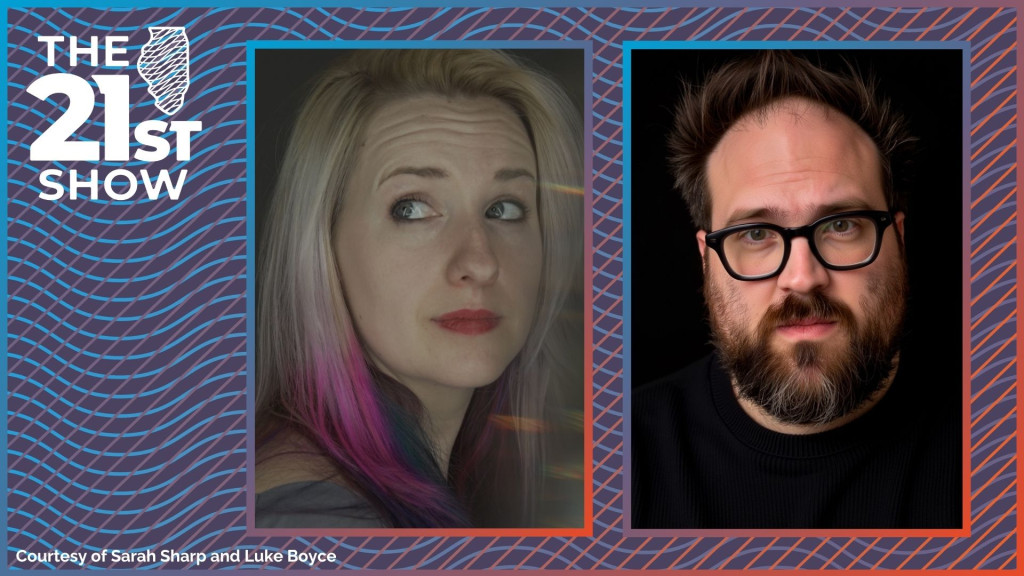
Sarah Sharp (left) is the co-founder of Flyover Film Studios and co-producer and production manager of “Chili Finger”. Luke Boyce is the founder of Shatterglass Studios and writer, editor and director of the upcoming documentary, "The Last Movie Critic." Courtesy of Sarah Sharp and Luke Boyce
// This is a machine generated transcript. Please report any transcription errors to will-help@illinois.edu.

[00:00:00]
Brian Mackey: It's the 21st Show. I'm Brian Mackey. For a long time, Los Angeles has been the capital of the filmmaking industry in America, but that has been changing. In Illinois, more than $700 million were spent on film productions last year, and it's not all in Chicago. Central Illinois got a piece of the action as well. A local production company called Shatterglass Films has made a new Roger Ebert documentary, "The Last Movie Critic." And last year, stars like Bryan Cranston and John Goodman filmed a comedy called "Chili Finger" around Monticello and Paxton with the help of Flyover Film Studios, which has its production base in Rantoul. Both of those films are going to be showing at Ebertfest this coming weekend in Champaign, alongside major releases like "Nuremberg" and "Get Out." Fittingly, Ebertfest will feature the premiere of "The Last Movie Critic." I should say tomorrow we plan to talk with Chaz Ebert and the festival director Nate Cohn, as they prepare to bring the curtain down on Ebertfest in its current form, which is ending after more than a quarter of a century. But for the rest of today's show, we're gonna talk about what it's like to make movies in central Illinois. So let's start with "Chili Finger," the comedy. Sarah Sharpe is co-producer and production manager on the film and one of the co-founders of Flyover. Sarah, welcome to the 21st Show. Sir, are you with us? OK, sir, I think you're with us. So I'm gonna ask you, I'll just dive right in. What motivated you and and some other folks to start Flyover Film Studios?

[00:01:43]
Sarah Sharpe: Hi Brian. Um, [Flyover] Film Studios initially started as a group of, uh, freelance filmmaker [hoarders] all coming together to figure out how we can preserve, uh, preserve the good parts of what it takes to like make films between like, uh, the wood that's needed to build a set, the clothing that this, uh, background character wore that maybe this, uh, focal character could wear. Um, we all, we all really struggled with how wasteful the industry was. So we started a really a collaborative like storage situation initially to try to figure out how we could hold things film to film very similar to like how a lot of theater communities operate and that just is kind of a gap in the film industry like, you know, traditionally films and TV shows when they shoot something. And wrap out. they don't own the building. they don't have storage or whatever, so there's so many things that are just thrown away. and that was something that we all really valued. We valued making good films and we valued making them in a way that [not] sustainable and just like a hip word of saying it, but sustainable in a way that like any budget can make a project that looks good. So that was, that was what brought us all. We'd all worked on films together initially, but that was a core part of [Flyover].

[00:03:01]
Brian Mackey: Is that Yeah, and so, and I should say I understand you did not hear any of the introduction I read. So sorry about that a little technical challenge on our end. So thank you for rolling with it. So, so I, I did set up a little bit "Chili Finger" — some of the big names who featured in that. So how does a production like that end up filming in central Illinois? Walk me through the process.

[00:03:23]
Sarah Sharpe: Well, this is, I'm actually so excited because I have had so many people, students and adults reach out to me here lately to ask about how important networking is, not just in the film industry, but just like generally in everything that you do. And this is like the ultimate story of networking. So I actually did a film with a gentleman who was the mentor of the producer of "Chili Finger" back in [2020]. I think it was 2020, 2020 or 2021, and we had, we did a very, very ambitious film together. It was in Chicago. We didn't even do it in Champaign like it was. no one lived here at this point. It was, we were all somewhere else shooting a totally different movie, but we created a good experience. There was like a, there was good leadership. There was a, uh, just a tremendous work ethic. This producer himself was just like a really lovely, lovely guy. I'll call him out, Seth Kaplan. he's a great dude if anyone ever gets to work with him. And anyway, the network expanded. His, uh, essentially his [protégé], uh, Sam Sanchez had been producing this film with Ed and Steven, the directors of "Chili Finger," and they were looking for a home to shoot "Chili Finger," which is a film that they had been working on for years. He mentioned it to Seth. Seth said that he had a great experience with a group in Illinois. They, uh, Sam got a hold of me. I then lived in Champaign at the time, which was way more fitting for "Chili Finger's" story, and, uh, kind of the rest is history. It was just a, it's really just like power networking and um, you know, making, making friends as you go and working with the people that you want to work with. So, but "Chili Finger" is the ultimate like kind of networking story. I'm so glad that I'm so glad to be able to say that on the air for people who are listening.

[00:05:17]
Brian Mackey: Well, it's often, as, as we say, it's not only what you know, it's who you know. So obviously the star actors are coming from out of town. How much of a role does local talent play in a production like this though, you know, both on and off camera.

[00:05:30]
Sarah Sharpe: it's pretty huge because honestly the local talent is the local talent is how you're going to get the project to begin with. Like, even though, like, yes, the A-lister may be who's on the poster, but ultimately, like, bottom line, you're going through your budget and figuring out where to place your project if your area has no local offering onscreen, offscreen crew, gear, whatever, generators, like even like the most basic of stuff that is so expensive just to shoot in a place that is that is cool or quote unquote quote unquote feels like a story. So I mean that was it was a big discussion. we really talked to the "Chili Finger" guys for well over a year and initially like that was a concern. They hadn't, they were not familiar with [Champaign]. Did Champaign have any crew or cast? Did it have anybody? And but during that time we had so much actually in development that they, they were willing to take a chance on it. And as people will see in the movie, those who get to go to Ebertfest, you couldn't have done a movie like that without a tremendous amount of local talent, specifically on screen. There's so many extras. there's so much like the background makes the world very [makes] the world very real and uh you know, picture cars, houses where we were shooting and then on the crew side, you know, it's very [it] took a ton of crew to make "Chili Finger" operate. So, but if that didn't exist, they would not have been here. Local talent is ultimately when you're making a project, the first like, like the first line of defense you have to get through to make sure it's present wherever you're going.

[00:07:08]
Brian Mackey: Excellent. Well, "Chili Finger" stars Judy Greer, Sean Astin, Bryan Cranston, and John Goodman. It'll be screening at the Virginia Theater in Champaign during Ebertfest. It's at 3:40 this Saturday afternoon. We'll have more of the details on our website, twentyfirstshow.org. Sarah Sharpe with Flyover Film Studios, thanks for joining us.

[00:07:27]
Sarah Sharpe: Thank you. Have a great day.

[00:07:29]
Brian Mackey: It's the 21st Show. We are talking for the last part of our program today about a couple of movies made right here in central Illinois. We've been talking uh until now about the comedy "Chili Finger." And now let's move to "The Last Movie Critic," the new documentary about Ebert Fest's namesake, Roger Ebert. It's actually premiering at the festival Friday afternoon. It was written, edited and directed by Luke Boyce, who is also the founder of Shatterglass Films. He joins us now. Luke, welcome to the show. Yes, Brian, thanks for having me. It's good to be here. Roger Ebert's a man about whom much has been written and said. How did you come to make a film about him?

[00:08:08]
Luke Boyce: Oh man, well, I have a very long history with the festival, my, uh, Shatterglass Studios, my commercial production company, um, that Shatterglass Films came from. Uh, we've been shooting Eberfest every year since 2011. Uh, so every year we would, we would get a crew together and make basically a small documentary, uh, usually about 10 minutes or so of that year's festival. So interviewing all the guests and getting, you know, talking to, um, festivalgoers and things like that. and so we accumulated a lot of interviews and a lot of footage and then, um, we, at one point we built an iPad app. Uh, we were in the process of building an iPad app that could, you could go in and look at old years from the festival. So there was all they had all these, uh, the original years from 1999 to the early 2000s of, you know, Q&As and uh uh introductions that Roger had done for every movie until he lost his voice in 2006. And so we, uh, those had never really been seen, they were in a box and we started digitizing and transferring all those tapes. Uh, so we had this archive of that footage as well. Uh, and, and then in 2013 when Roger passed away, you know, we kind of put a little bit more effort into that festival because it was, he had died right just a couple weeks before the festival. And so that particular video that year uh won us an Emmy actually. and so it was, it was on the backs of all that work and all that content and stuff that we, we talked to Nate Cohen, um, who is the festival director about turning it into some kind of a feature film. And, you know, we, they went through a couple iterations trying to figure out, OK, what, what does that look like? Um, how do you make a film kind of about Ebertfest in a way, kind of about Roger, but it's not an Ebertfest commercial. And so yeah, it just sort of took took many years of development to try to kind of find that story, but, but eventually it kind of told itself, um, as we kind of went through and developed it and kind of came out as what is currently the film.

[00:10:24]
Brian Mackey: Yeah, I wonder if you can sell me on the premise of your title, right? that Ebert was the last movie critic.

[00:10:30]
Luke Boyce: Yeah, so that's kind of the thesis of the film we had it, it basically follows a film student who is trying to understand, OK, what happened to film criticism? Um, she's sort of living in a time when film criticism is very different than it used to be and, and, uh, her in the film, she mentions her professor gave her this book about Roger, and so she decides to investigate what, what made Roger different. Why was he different? and, uh, so she goes to Ebertfest, so Eberfest becomes kind of a character in a setting in the film, um, very important one because it is at Ebertfest, uh, and sort of this magical realism kind of way, uh, where the spirit of Roger Ebert guides her through what is kind of a version of Ebertfest. Um, so we see four different films that Roger championed through his life, some of his favorite films, um. Three of which, three of the four of which played at Ebertfest and so we see, we cut to the Q&As and the and the um introductions that Roger gave of those films, and we hear Roger, uh, in a very special, uh, technological way, uh, read his writings on those films and so it's essentially kind of telling the film student who is, you know, a placeholder for the audience. We kind of just get to experience Roger, which is something I think that we're losing today. a lot of people don't know about Roger as much as they used to. Uh, he hasn't been on television in a very long time, and so, um, he was formative for a lot of people and so we're hoping that this film kind of is a reminder and kind of reintroduces uh the magic of Roger Ebert to audiences and why he believed what he believed in his mission about movies.

[00:12:21]
Brian Mackey: I'll say that. I mean, for myself as a, you know, when I was a young newspaper reporter 22 years ago, I certainly looked up to him and counted him as an inspiration for what I was doing. Just, just a couple of minutes left. What does it mean for central Illinois to be losing Ebertfest, it seems after this year.

[00:12:38]
Luke Boyce: You know, it's, it's tough, it's tough. I think it's, it's part of a, it's part of a scary epidemic to me about how we're losing the theatergoing experience, which to me I think the film deals a lot about. We, we talk in the film, we hear Roger talk about the importance of seeing a movie on a big screen projected through light in front of an audience that is giving it its all and so I think that we just forget that the that there is an energy and a power in watching something together. Um, movies, I think are, are of all the arts are the are one of the most unique of the arts because they are, as Paul Cox said, shared dreaming. You all get into a room and you all experience the sort of shared empathy together with the characters on screen. and at Ebertfest in particular, I think one of the things that's always been special to me is that if you watch, you can even watch a comedy you've seen a million times, but the laughs are bigger and they're stronger or the or the drama is, is more potent and the cries are bigger, you know what I mean? When you're in a, in a row of people who are all just absolutely, you can feel the attention, uh, and everyone's giving it their all. It's very different. I know people say, oh, you can just watch the movie at home. This is totally different when you watch a movie in a theater with people, um. You get something more from the film. And so, you know, it's something I think we're losing. I think something we're forgetting about as a as a culture and I think Ebert fests are some of the, you know, remaining pillars that sort of do that because that's what Roger did is the only festival that a film critic created. Invited people to come watch movies at his thing that he picked and you all just sit there as if you're in his big giant movie palace living room and watch movies together with with Roger there, uh, and so, yeah, I think losing it is, is, you know, it's a, it's a shame, um, and I hope, I hope it can still find a way to exist. Uh, I know Chaz is interested in, in, in how else she can do it, um, and maybe one day it comes back, who knows, I think. I think the the benefit of that we of any kind of important cultural thing, art thing like this is that eventually we crave it just like vinyl resurgence and all these other things we sort of crave that analog shared uh experience together. So

[00:15:03]
Brian Mackey: yeah, all right, Luke Boyce is the writer, editor and director of "The Last Movie Critic," which premieres at Ebertfest Friday afternoon this week. Luke, thanks so much for being with us today on the 21st Show.

[00:15:15]
Luke Boyce: Thank you. I appreciate it.

[00:15:17]
Brian Mackey: And I should say we are talking with Chaz Ebert and the director of Ebertfest tomorrow on the 21st Show. But that is all the time we have for today. the 21st Show is a production of Illinois Public Media. I'm Brian Mackey.
For the longest time, Los Angeles has been the capital of the filmmaking industry in America. But that’s been changing in recent years. In Illinois, more than 700 million dollars were spent on film production just last year. Central Illinois has had a share of that.
A local production company called Shatterglass Films has made a new Roger Ebert documentary called “The Last Movie Critic.” Last year, stars like Bryan Cranston and John Goodman filmed a comedy called “Chili Finger” around Monticello and Paxton with the help of Flyover Film Studios, which has its production base in Rantoul.
Both of those films will be showing at Ebertfest this coming weekend in Champaign alongside major releases like “Nuremberg” and “Get Out”. We talk to some of the directors and producers behind these films about what it’s like to make movies in Central Illinois.
GUESTS
Sarah Sharp
Co-founder, Flyover Film Studios
Co-producer and production manager, “Chili Finger”
Luke Boyce
Founder, Shatterglass Studios
Writer, Editor and Director, “The Last Movie Critic”