








After 17 years in prison, he was homeless the next day
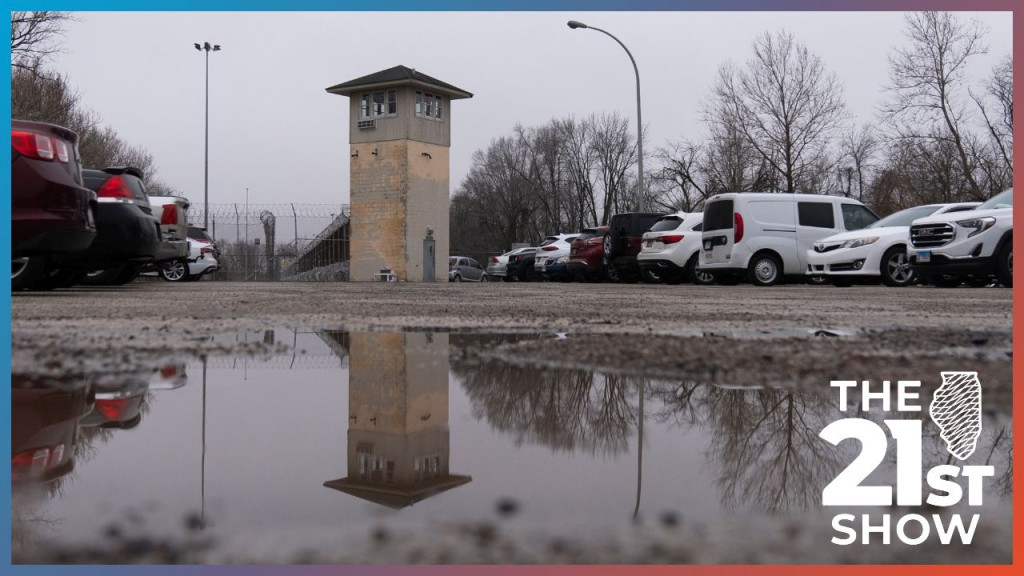
A guard tower at Logan Correctional Center in Lincoln, Ill. is seen in this file photo from 2024. Erin Hooley/AP
// This is a machine generated transcript. Please report any transcription errors to will-help@illinois.edu.

[00:00:00]
Brian Mackey: It's the 21st show. I'm Brian Mackey. When it comes to crime and punishment, there's an old expression that people who go to prison are paying their debt to society. And when someone gets out, that debt is supposed to be considered paid. Except in American society, there are ways we keep on collecting. A criminal record can follow someone for years, if not the rest of their lives, affecting job opportunities, in some states, voting rights, and even finding a place to live. But here in Illinois, there's an effort underway to address at least the housing part of that. It's called the Home for Good Act, House Bill 624, if you want to look it up yourself. It would create a statewide program meant to provide housing and services to people when they get out of an Illinois prison. It narrowly passed in the state House of Representatives this spring, but failed to advance in the state Senate. Backers are hoping to make another run at it during the fall veto session. Joining us now to talk more about this is Amadou Dramé, director of the Illinois Justice Project. Amado, welcome back to the 21st show.

[00:01:14]
Amadou Dramé: Thank you for having me. It's good to be with you,

[00:01:16]
Brian Mackey: Also with us, Doctor Marlon Mitchell, founding executive director of First Followers in Champaign, which helps people transition back into society after leaving prison. Marlon, welcome to you as well.

[00:01:29]
Marlon Mitchell: Thank you, thank you. Thank you for having me. Glad to be here.

[00:01:32]
Brian Mackey: Javier Reyes is the founder and CEO of Challenge to Change, an Aurora-based nonprofit that aims to make changes to the correction system. Javier, welcome to you as well.

Javier Reyes: Thank you.

And listeners, you can join us today at 800-222-9455. Especially if you or someone you love served time. What was your or their experience uh coming back out? Um, do you think Illinois should be doing more to help people transition back into society? 800-222-9455 is the number. 800-222-9455. All right, I want to start with um some personal experiences with the correctional system. And uh Marlon Mitchell, I know you've talked about this before. Can you tell us a little bit about what, what your life was like immediately coming out of DOC?

[00:02:24]
Marlon Mitchell: Yeah, I spent several years in the Illinois Department of Corrections in the early 90s and um upon returning home, it was very difficult. There's a, I mean, there's there's a list of barriers that you, that you, that you eventually face and one was employment and then also housing was a big, big challenge for me, myself. I uh actually paroled to my mom's house and at the time, my older sister lived there with her 3 kids and so it was a 2-bedroom house, uh, and I had to parole there, so overcrowding was definitely an issue. It became a barrier.

[00:02:58]
Brian Mackey: What are some of the challenges to say, you know, going out and getting your own apartment?

[00:03:02]
Marlon Mitchell: Employment, first and foremost, seeing who would hire somebody who has a, uh, freshly out of, out of prison. I was on parole for 33 years. So, you know, you fold that into all the other things that you're trying to do with the social stigma and just trying to navigate all the social services and just trying to figure out, you know, how do I really get my feet up under me in a sense where I can pick up sort of where I left off, um. And try to try to just put the pieces back together. And employment, you know, that was very difficult. I got turned down for a lot of different jobs, uh, and I already mentioned that the issues that I had with, with uh paroling back to my mom's house. So, yeah, so there's a lot of different barriers that, you know, some of these unseen barriers, but some of the obvious ones as well. But I think one of the main things and even, you know, I can as I look back, I can even say that even today, there's a social stigma that I face. Although, you know, I've been home for quite some time. I've been pretty much successful, but, you know, society still paints that picture of folks who have a felony conviction even though that they've moved on with their lives.

[00:04:06]
Brian Mackey: Even after 30 years.

[00:04:09]
Marlon Mitchell: After 30 years, exactly.

[00:04:12]
Brian Mackey: Uh, Javier Reyes, same, similar question to you, um, to the extent you're, you're willing to talk about it, what was like, uh, life like transitioning for you out of, out of the Department of Corrections?

Are you with us? I think you might have your connection muted there. Javier, all right, uh, maybe we can come back to Javier in a minute.

Amadou Dramé, let me, let me come to you. So, um, after hearing, uh, Marlon's story there, talk about the Illinois Department of Corrections, its current state, you know, what, what does it do for people who are, you know, supposed to be leaving, uh, coming back into society, right?

[00:04:55]
Amadou Dramé: Yeah, uh, and thanks again for having us on. Um, currently, when a person is leaving the Illinois Department of Corrections, um, if they're an individual who's identified that they don't have a place to go, uh, upon release, the Department of Corrections will usually make plans, assuming you're still on our state's version of parole, which is called mandatory supervised release for most people who are released from state prison. Uh, the, the Department of Corrections will make arrangements for, um, typically some months' worth of transitional housing, um, provided you're still under community supervision, um, as we have it. Um, in addition to that, um, you know, there are opportunities, uh, in certain instances to try to enroll into Medicaid prior to release if you're eligible for it. Um, usually people's benefits are suspended before they're released. Um, but the, I'd say the fundamental challenge, uh, that we see is there isn't a systematic way by which the department assesses the degree to which people are at risk of experiencing homelessness. It's one thing to ask a person if they have a place to go. Uh, but homelessness is a term that includes literally living and sleeping on streets, but also living doubled up with people, uh, assessing whether or not a person's living situation is actually stable. And so, um, a big gap that we see is that we just don't have a systematic way yet of determining how vulnerable a person is to experiencing homelessness or housing instability.

[00:06:36]
Brian Mackey: Yeah, if your sister or your cousin or whatever says, yeah, you can sleep on my couch. I mean, you're, I guess you're technically, you know, not, not, uh, without a home, but you are maybe legally considered homeless in, in that circumstance, uh, because you're living at the whim of your relative. Yeah. Exactly, yeah, I, I think we might have, uh, Javier Reyes back with us. Javier, are you back with us?

[00:07:00]
Javier Reyes: I am.

[00:07:03]
Brian Mackey: All right, no, it's all good, technology. What are you gonna do? So maybe you can talk about — we heard, uh, Amadou Dramé mentioned mandatory supervised release, which is what most, uh, people coming out of the Department of Corrections experience. I know you have, uh, you know, your own experience with this. Can you talk about what that process was like for you?

[00:07:22]
Javier Reyes: Um, it's, it's extremely difficult, and I'm — when, when you guys talked about someone sleeping on a couch, um, I was given immediate release in 2020, um, based on the First Step Act and a motion I filed, um, and I went to my son and my daughter's house and I slept on the couch and they're grown. I, I spent 17 years in prison, but when I, when that morning when I woke up, I felt my son like looking over me. And when I opened my eyes, you know, you, you, you've been away from these kids for 17 years and this is all you hope for, but my son not understanding my release and the conditions and all of that, his question to me that morning was like, where are you going to spend the night at? Um, I was, I was lost for words, and I told this kid, hey, I'll I'll, I'll figure it out. I'll figure it out, son. Um, and I, and I, and I had to figure it out because immediately after spending 17 years in prison, um, the next day out of jail, I was homeless. Unhoused and who can I turn to, right? Because I turned to the people that I thought I was going to come home to.

But there's another bigger disconnection too is, is just the educational piece of understanding what it is that someone who is exiting the [carceral] system is experiencing immediately. Um, and when you are placed, and let's go a little bit deeper into the supervised release, when you're being placed in IDOC into a residence, they're not seeing if this is a safe environment for you. All they need is an address. This is not a home. This is just an address. And being tethered to the system, you had started and said that when you go to jail, you pay your debt to society, but what they don't tell everybody that this debt has an interest. That never goes away. This is a lifelong tethered experience that you have with a [cultural] system that is not designed to help someone when they are being released from prison. Their job is to incarcerate you, so those two entities don't mix. So Home for Good is, is, and whoever they'll know is HB 624, just please look it up. Home for Good separates that entity. We are not tethered to that carceral system. This is a, this is a system that's going to be put in place that's not going to allow another system to continue to harm a population that's just — for my experience, that's being ignored.

[00:10:05]
Brian Mackey: Javier, I kind of imagine that, you know, when you're coming down to that, that moment, you know, that day when you're supposed to get out. I don't know if you're counting down the days literally. I mean, there's gotta be like some good feeling about that? Did you have a sense of how, uh, you know, precarious and difficult things would be once you finally got out?

[00:10:24]
Javier Reyes: Absolutely not. There's nothing in the carceral system that prepares you. To not have a stable place to live upon release and and and another thing is a lot of folks are are are given these draconian sentences that they spend 25 plus years in prison that they lose their parents, their grandparents, their support system, and they're exiting into a world where they don't have that support no more but Home for Good will change that.

[00:10:56]
Brian Mackey: Marlon Mitchell, can you talk about that as well? I mean, do you get the sense that most people are surprised by the challenges when they get out or, or how, how do they think about that? How do you see people reacting to that?

[00:11:09]
Marlon Mitchell: Well, I don't think it's a surprise. It's a. It's more of a um being overwhelmed. Right? So many things are being thrown at you at one time once you've been incarcerated and then you're just released. And if you're going to, and my — add one point that I also want to make is going back prior to incarceration, oftentimes folks are already — housing situations are already unstable, right? And so when you're trying to parole or once you're being released, you just have this, this mixed feelings of OK, what's my next steps? Right?

So here at First Followers, one of the things — we've been in operation for over a decade now and we have a drop-in center and we get individuals that are immediately returning home from prison and you know, you can just, when, when we, when they come through our doors, you can just see the glaze in their eyes as far as, OK, can you please provide me with some sort of guidance because I don't know what my next step is. And when you're trying to find housing or stable housing, when you're trying to find employment, you have very little money in your pocket, if you have any at all and you're trying to navigate all these things at once. So it's not a surprise. It's just I'm being overwhelmed. I don't know what my next steps are.

I just had a young man that came, well, actually a a a gentleman that came home in our drop-in center last week. He stopped in and he literally had just been released from prison and he had a duffel bag full of clothes and he didn't have anywhere to go. And somehow he found us and here in Champaign, you know, we have one, maybe [12] shelters that are here. And at the time when he was released, he got off the Amtrak. And he he made it to our center the next day. And one of the questions I had for him was, where did you stay last night? He said, I just slept around the train station until you all were open. And so, uh, they didn't have a bed for him over at at the local shelter here and so we can only do so much. But this gentleman is still trying to figure out, he's been home maybe 2, maybe 3 weeks at this point. He's still trying to figure out where is he gonna lay his head. So yeah, it's a, it's just a a rush of emotions and if I had to put a, put a uh — define that, it would just be, just being overwhelmed.

[00:13:33]
Brian Mackey: [Amadorame], let's talk about the Home for Good Act. So, and I should say we have just about 3, 3.5 minutes till we need to take a break. But um, what, what is in that piece of legislation? What does it hope to address?

[00:13:46]
Amadou Dramé: Yeah, so thank you again for the question. The Home for Good Act responds to a survey that we conducted in state prisons that found that 70 to 80% of the people who are currently incarcerated in our state prison system experienced housing instability or homelessness at some point in the 3 years before they're incarcerated. Um, it has 4 elements. Uh, it would provide people who are leaving state prisons, who complete a housing needs assessment tool and who are found to be at risk of experiencing homelessness, we will provide them with rental assistance as they are transitioning home so that they have resources for rent to keep them stably housed. It also includes as a second element, uh, support services, which is critically important. You know, I think Marlon and [Jay] have have told important stories about themselves and other people who really would benefit and have benefited from, um, support services.

Uh, the third element is that it would develop housing units specifically for people who are leaving incarceration. And I want to be clear in that it's about developing housing units and, and, and subsidizing the creation of units, not necessarily subsidizing entire apartment complexes. But people experience a lot of housing discrimination and what we're trying to do is create a mechanism that creates units specifically for them so they're not experiencing homelessness at 13 times the rate of the general population as is currently the case today. And then the last element, uh, fourth is the creation of a Home for Good institute, which is really about training community-based organizations, um, on how to finance, acquire, develop, rehab, and operate affordable housing for people who are leaving state prison. Um, and so, you know, through that program or that element, uh, community-based organizations will go through it and upon successful completion, um, when they apply for funding from the Illinois Housing Development Authority, which is our, our state's housing finance agency or, you know, you could think of it as a public bank for affordable housing development, um, they'd receive additional points as an incentive and as a positive reward for completing the program and showing that they know how to do this type of work.

[00:16:01]
Brian Mackey: Is this one of those pieces of legislation that would be subject to appropriation, or has there already been money sort of set aside for this? Should it have been passed, or how does that work?

[00:16:10]
Amadou Dramé: Yeah, I, I appreciate that question. So it is not subject to appropriation. Um, it, it relies on existing funding. So our state currently, uh, has legalized — years ago, uh, recreational cannabis, um, for adults — and it brings in a considerable amount of revenue that goes over to an organ — or state agency rather — that's called the Illinois Criminal Justice Information Authority to fund things like reentry services, violence prevention, economic development, and what have you. And so, uh, last year, the Criminal Justice Information Authority set aside, uh, about $35 million for, um, reentry services, and this program relies in part on that. Um, on a parallel basis, separate from the bill, we're also asking the General Assembly to appropriate $50 million to um, invest in the housing elements of the program as well. So it's not technically subject to appropriation. There's some existing state funds that it relies upon, um, but we do need additional investment to get to scale.

[00:17:14]
Brian Mackey: All right, we're gonna talk more about this, uh, proposed legislation — uh, when we — Home for Good Act. When we come back, we need to take a break. This is the 21st show. Stay with us.

It's the 21st show. I'm Brian Mackey and we're talking about the Home for Good Act. It's legislation in the Illinois General Assembly that aims to address uh some of the needs of people who are trying to get back into society after having served time in Illinois prisons. Uh, we're talking about this with advocates of the legislation today. Marlon Mitchell is the founding executive director of First Followers in Champaign, uh, which helps people transition back into society after leaving prison. Javier Reyes is founder and CEO of Challenge to Change, an Aurora-based nonprofit that aims to make changes to the correction system. And [Amadorame] is director of the Illinois Justice Project. You can join us today at 800-222-9455. Especially if you or someone you love has done time in an Illinois prison. What was transition out like? Let us know. 800-222-9455. What do you think? Is this where the state should be spending its resources? 800-222-9455.

And [Idram], we were talking before the break about where the money for this comes from. You said some of this comes from the cannabis legalization. There was sort of like a justice aspect of that legislation when it was passed, and some of the money that's collected in taxes has gone to state agencies that are aimed to redress some of the, you know, past harms of cannabis criminalization in Illinois as, as the backers would say it. Uh, and then some — you're also requesting $50 million. You know, what do you say to people who say, you know what, this is not where Illinois needs to spend its money. There are so many needs. Why should we put, you know, resources towards these people who have done wrong to our society? What, what do you say to that?

[00:19:25]
Amadou Dramé: Yeah, so I think it's important to set the context. We already pay for this. A lot more money than we're requesting for [homeme] for Good, I might add. Uh, we spend 2 billion — $2 billion a year to run our Illinois Department of Corrections or state prison system. Uh, each recidivism event in the state of Illinois costs an average of $200,000. So every time a person returns to incarceration, it costs taxpayers in this state and society $200,000 per event. We have a 40% recidivism rate, which is to say that if 10 people walk out of prison in a given year, 4 of them are coming back within 3. It costs us a billion dollars a year just to deal with the costs associated with recidivism. And what we're trying to do is put forward a strategy and a program that costs $50 million yes, but would save the state half a billion dollars over three years. And so, I would, would, would ask people, are you, do you think that today, the way we go about incarcerating people and with the recidivism rate of 40% — are you getting the best bang for your buck and do you feel like you're getting the best safety that you could possibly get? Or would you rather invest less money in an intervention that actually proves to be effective at helping people not return to prison, find stable housing, find stable employment, contribute to the tax base. Um, and strengthen our communities as opposed to, uh, having no options and returning to situations where they have to go to the illegitimate or underground economy, um, to try to make ends meet for themselves. So we already pay for it today and we pay a lot more money than we, uh, are asking for in this program. And I think what people would be pleased by if we gave Home for Good an opportunity to be enacted and invested in, is the cost savings that could be realized um by making sure that people aren't returning to prison um as frequently and as regularly as they are today.

[00:21:44]
Brian Mackey: Doctor Marlon Mitchell, can you also speak to this question? I'm sure you've run into this, you know, fundraising for First Followers. Um, you know, how, how do you make that case to people that this is where, uh, resources should be directed?

[00:21:57]
Marlon Mitchell: Definitely. Definitely. So one of the things that we've been doing with First Followers, we have 2 reentry houses, right? We have one for the female population and one for the male population. And for the male population, we've been running that since 2019. So we fully understand how important housing is, how important the social service — the direct services are to get people['s] feet up under, up under them so they can be successful as they move forward. Um, our transition houses have been very, very successful. And just to kind of, uh, put in some, some context around what the bill is, one of the things that, as I read through the fact sheet when I first come on, come on board with this a couple of years ago, is that we've been doing this type of work for the last almost decade, [7, 8] years. Of trying to find housing and what does that look like for folks that are transitioning out of prison.

So with our housing, we call it First Steps and with our housing, we have, we partner with the local housing authority where they provided us with the houses and these houses were — we, um, were vacant at the time and they were scheduled for demolition. And so we lobbied and we we uh advocated, hey, could we use that housing in order to create transition housing down here because my lived experience told me clearly that it was a need. And so we were able to secure two of those houses and we've been running this program where we haven't had anyone that have come through our doors and lived in our houses recidivate. Not one. But what we have had is for folks to get gainful employment, folks to go back to school, uh, folks to leave our transition house, our reentry house and actually purchase their own housing. So with the with the supports that we provide, the mentoring that we provide, and just understanding the landscape and the difficulties that it is to transition from [DLC] into the local community. It always gonna have to have some sort of support mechanism a little bit more than what the IDOC is doing when they just release people back into the communities and give them [10, 15] bucks of pocket money and say good luck.

[00:24:16]
Brian Mackey: Yeah. Javier Reyes, do you have stories like that from, you know, cha — Challenge to Change or, uh, you know, and, and just your, you know, your own experience seeing the difference that like good programming can make with people transitioning back?

[00:24:31]
Javier Reyes: Um, absolutely, um, Challenge to Change — our four-time awardee, um, from the Illinois Housing Development Authority. So we are currently operating 2 houses and have a third one that we take possession of, uh, next week. We're finding properties that are distressed and are are are turning them into like exceptional homes. We just were awarded the mayor's most improved house in the historic district in a community that said oh not in my backyard you're not doing that um but we've been able to transition folks coming home. Um, and I'll give you one — Sonia, um, who was not from here, is from California, and immediately once released from the work release center — again a situation that was peril, she had nowhere to go, um, so we were able to house her. She's been with us 6 months, in her 4th month of being with us, she walked to a dealer for the first time in her life and purchased a new car. She works two jobs. Um, and she's always constantly saying, man, thank you guys. If it wasn't for this, I don't know what I'd do, um, so creating that space, um, and working with folks who are who have the lived experience and, and, and know what it is to come home and, and, that really helps that transition.

Um, we don't, we don't want to be called transitional homes because that's not what we are um we're more of a temporary supportive housing. Um, and I'm sure [I'mma do] get into that later of the supportive part, um, because it's, it's, it, it'll be remiss of me to say that I, I, that a lot of support has to go in, in, in preparing people to not only get housing but to sustain it and to be able to, to go on to the next level of, of keeping a job, of reintegrating, of doing the whole spectrum of, of being restored to um, a full citizenship. Um, and, and this is what, what, what these houses do. They give folks a true meaningful opportunity to get a real chance at, at, you know, being successful, um, on their second time around, um, and this helps.

[00:26:51]
Brian Mackey: Yeah, I'm — [I'mma do drame] with the Illinois Justice Project. We've only got about 5 minutes left, so you can speak to that, but I also want to ask you about the politics of this. Um, so I, I'll let you address, uh, uh, Javier's point if you want first though.

[00:27:06]
Amadou Dramé: Yeah, I mean, I think, I think it's important to just say that people require services and we can't take cookie cutter approaches to meeting their individual needs. Um, under the Home for Good Act, uh, we'd start reentry planning no later than 12 months prior to a person's release date. Um, and to be honest with you, uh, if, if, if we could do it much, much earlier, as soon as a person entered uh the prison system, we do that. Um, but we are trying to create a mechanism here, a program here where people are connected with the individuals who are gonna support them in community well before they're released, so they have time to really develop uh relationships, um, and partnerships at a very natural and unrushed pace, um, so that we can connect people to resources and that they have that guiding hand and support as they're transitioning home in the ways that [Javi], um, and his team are, uh, doing.

[00:28:05]
Brian Mackey: Sorry, yeah, just a few minutes left. Let me set this up by saying 63 to 34 was the vote in the House. Now I'm looking at the roll call. I can see a few names on there were excused absences that day who, based on what I know of them, would probably have supported this if they had been present in Springfield. So maybe it would have been not quite so close. Um, but also some people who took a walk, as they say in the Capitol — didn't didn't vote on this when they were supposedly in the building that day. So what is the obstacle? Why did this not get even so much as a committee hearing in the Illinois Senate?

[00:28:38]
Amadou Dramé: Well, I, I appreciate your observations about the roll call. All's well that ends well, um, is, is, is my feeling about that. Uh, and it was a Friday, to be fair. But, um, the, so there — state agencies have identified, and I think this is really coming down, um, they were asked to do so because we're facing all sorts of fiscal pressures by circumstances created by the federal government pulling back on funding, um, you know, and, and, and the pressures that, that, that, that thrust upon the state government to fill holes in the human service system in housing. I'm sure you've covered, you know, many of those topics about how the, you know, HUD and other federal agencies are changing policies and practices and and how it's impacting funding that comes down the states. So this, this is, this is — we are not immune from that. And in many respects, um, the governor and his team are being very responsible in trying to tighten the belt fiscally and make sure that we withstand any storms that we may face.

Um, you know, having said that, state agencies had to object on the basis of there being a fiscal impact to the state. You asked earlier if our bill, um, is subject to appropriation and we already talked about how it is not. Um, so it also costs the state money and resources and time, uh, to implement, uh, the project as well. Uh, we made it to the Senate, had a hearing. Uh, we have, I think, 18 co-sponsors today. Uh, we feel really good about things and we've worked over the summer to address the concerns that state agencies have addressed. So, uh, we went out and raised resources, um, from our philanthropic partners and, uh, we hired a team of consultants who are doing things like, uh, developing an inventory of how much housing there is accessible to people leaving state prisons, drafting program rules, uh, putting a program map together, getting a case management system in, uh, in place, finalizing our housing needs assessment tool and putting curriculum together for the institute that I was telling you about earlier.

Um, with, with, with that said, we are doing what we can to address concerns and, you know, so long as there's an opportunity to call the bill for a vote, um, we feel confident that we have addressed state agency concerns about the bill and and and what's within the scope of being able to, to, to address the state agency concerns around the bill. Um, and so we're really confident, um, in, in that we're grateful to the state agencies for working with us and partnering with us. We've got partnership with all of the directors of the three state agencies, [ICA Ada] and DOC. Um, and so, you know, we just have to work it and, and keep at it. The issue is not going anywhere, uh, and we need a solution to it. We've got one. We just need to call the bill and, uh, and, and, and pass it.

[00:31:31]
Brian Mackey: We'll see what happens. Amadou Dramé is director of the Illinois Justice Project. Thanks also to Javier Reyes, founder and CEO of Challenge to Change, the Aurora-based nonprofit, and Doctor Marlon Mitchell, founding executive director of First Followers in Champaign. Thank you all so much for being with us here today on the 21st show.

That is it for us today. Coming up tomorrow, millions of Americans are in relationships with people who have different political viewpoints. Uh, there's a professor here in Illinois, [Emily Van Doon] at the University of Illinois, who writes about her conversation with some of those people about how they navigate that. Her new book is called Hearts Divided, How Politics Shapes Our Closest Connections. Maybe you are in a relationship with someone with whom you have some pretty serious political disagreements, right? Progressives and [maA] living in the same household. We'd love to hear what that's like. Let us know. You can email us at [talk@2firstshow.org] or leave us a voicemail or join our texting group and respond that way. We actually asked members this morning about these questions. You can find out all the ways to do that at our website, twentyfirstshow.org. That's 21stshow.org. The 21st show is a production of Illinois Public Media. I'm Brian Mackey. Thanks for listening.
Leaving prison is supposed to mean a person's debt to society has been paid. But for many people coming home from Illinois prisons, the first problem is figuring out where to sleep that night.
The Home for Good Act (House Bill 624), would create a statewide program offering rental assistance, support services and new housing for people leaving state prison who are found to be at risk of homelessness. It narrowly passed the Illinois House this spring but stalled in the Senate. Backers hope to revive it during the fall veto session.
Three advocates for the bill, including two men who served time themselves, talk about what reentry actually looks like and why they say housing is the place to start.
Discussed
- Illinois General Assembly: House Bill 624 (104th G.A., 2025–26)
- The News-Gazette (opinion): If It's Not There, Build It: The Case for Housing a Vulnerable Population
- Chicago Sun-Times (opinion): Greenlight Task Force, Home for Good Bill, to Ease Lives of Illinois' Formerly Incarcerated
- FirstFollowers: Website
- Challenge II Change: Website
Guests
Ahmadou Dramé
Director, Illinois Justice Project
Marlon Mitchell, Ph.D.
Founding executive director, FirstFollowers
Javier Reyes
Founder and CEO, Challenge II Change