



Why smaller Illinois universities want changes to state higher education funding
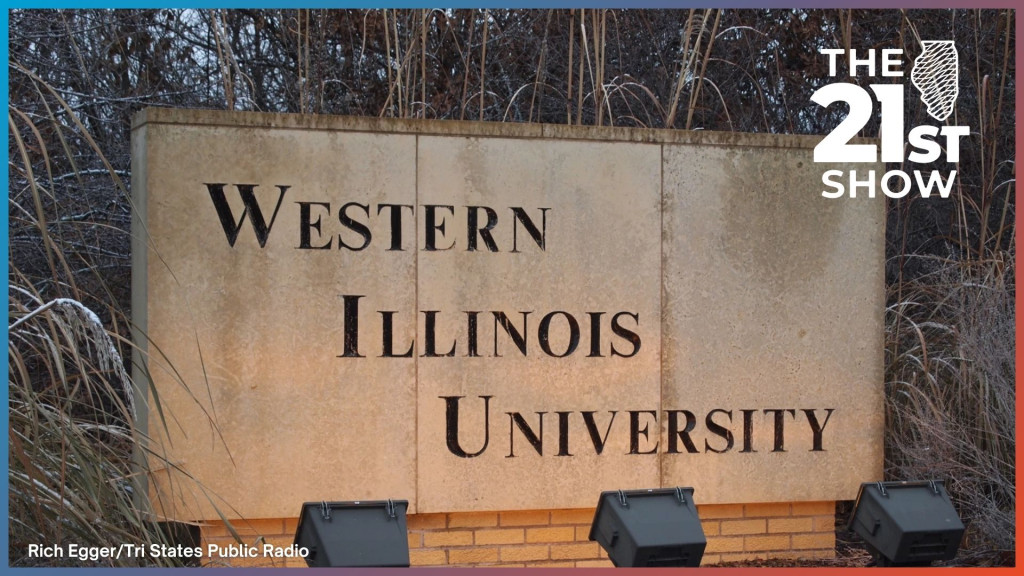
Rich Egger/Tri States Public Radio
// AI-assisted formatting failed. Using simple formatter.


// This is a machine generated transcript. Please report any transcription errors to will-help@illinois.edu.

[00:00:00] Brian Mackey:  From Illinois Public Media, this is the 21st show. I'm Brian Mackey. Almost a decade ago, the Illinois General Assembly overhauled the way the state contributes to the cost of elementary and secondary education, K-12 through high school. Under that law, any new money for that set of schools has been prioritized for districts that historically have been underfunded. Now, some legislators are hoping to take that approach to higher education, changing how new money is allocated among the 21st states public universities. As we've talked about on the program, several of them have been struggling. Take Western Illinois University, which has had to lay off and furlough dozens of workers in recent years. According to the independent advocacy and research group Advance Illinois, WIU is at less than half of the funding it needs from the state of Illinois. Compare that to the University of Illinois Urbana-Champaign, where our program is based, which is at almost 90% of what's considered adequate funding. All this is reflected in legislation which calls for bringing more than a billion new dollars to the state's universities over the next 15 years, with the state's smaller and less well-funded schools getting top priority for that money. The legislation has struggled though in the past couple of years. One of the key opponents to it has been the University of Illinois system. I should note at the outset here, our producing station, Illinois Public Media is part of the UFI Urbana champaign, but we are editorially independent. The debate around the legislation continues, so we're going to talk about that throughout the program, starting with people at some of the universities we have been talking about. So, I want to introduce Dr. Kristi Mindrup, the president of Western Illinois University. She's served in that role since 2024, but she has worked there since the late 1990s, earned her master's degrees, master's degree there in 2000. Dr. Mindrap, welcome to the 21st show. Thanks for being with us.

[00:02:08] Dr. Kristi Mindrup: Thank you. It's great to be here.

[00:02:10] Brian Mackey: Also with us, Doctor Christy Borders, who is a professor in the College of Education at Illinois State University in Normal. She's also on the executive board of the faculty union there. Doctor Borders, welcome to the 21st show to you.

[00:02:24] Dr. Christy Borders: Thank you. Happy to be here.

[00:02:26] Brian Mackey: And listeners, I want to invite you to join us throughout the program today. The number is 800-222-9455. How do you feel about the way Illinois universities are funded these days? Do you think there should be a full scale overhaul of the funding process? Maybe you work at a state university. What would these changes mean for what you do? 800-222-9455 is the number. 800-222-9455. All right, Doctor Mindrup, I'm gonna start with you. How have you seen Western Illinois University evolve over the past 3 decades or so?

[00:03:02] Dr. Kristi Mindrup: Well, that, that would take a very long time, uh, to, to talk in detail. So let me just give a summary. I think there have been a few things that have changed, uh, during 33 decades. Uh, the first one, that strikes me the most, having been at variouss At Western Illinois universities, uh, is, is the way that we're funded, uh, across a period of time and we've seen the, the impact of that funding along with a significant shift in the narrative around the value of higher education in the world today. And so with that comes an opportunity, I think for our state uh to first of all recognize the, the value of regional public universities and serving the regions where those institutions are, are located. Uh, and then also going back to the narrative, this opportunity, uh, for our state to also really emphasize the power of higher education both for students as individuals, but then also as contributors for regions like those that are public, uh, regions. universities are located. So Macomb, Charleston, uh, DeKalb, and so many more. These are great examples of, of places on the map within our state, uh, that need to be able to offer successfully an accessible and affordable education for students.

[00:04:25] Brian Mackey: How much would you attribute, you know, changes at Western, some of the challenges I mentioned there to Uh, the state funding situation and maybe you can just walk us through how that's changed over time.

[00:04:34] Dr. Kristi Mindrup: Sure, I, I, I think, um, you know, it, it all starts with, you know, when we look back in our rearview mirror, I think 2015 with the state budget impasse had a significant impact on institutions like Western Illinois University. It created a space where we were positioned to have to recover from that time. Uh, also during that time we saw cost increases, uh, and when that happens, uh, we need to find ways to make adjustments within our universities, and, uh, part of the way universities can address that is, uh, with tuition, uh, making adjustments to tuition while also trying to stay affordable. Uh, and I think the, the other impact of that has just been a recognition by our universities that we need to make the changes that we're responsible on our end. To make sure that we're meeting the needs of students in our regions, uh, and then also, uh, ensuring that we're affordable. and the next step in that process, uh, while, while institutions like Western have made those adjustments, the funding formula creates an opportunity, uh, for our great state, uh, to recognize the value of higher education and to contribute their part in the ever evolving landscape of higher education in our state.

[00:05:55] Brian Mackey: All right, let me bring in Doctor Christy Borders again, professor in the College of Education at Illinois State University, also on the executive board of the faculty union at ISU. Uh, Doctor Borders, I mentioned that Advanced Illinois, uh, study, it's statistics on higher ed funding, um, put ISU at 55% of the money it would need to be considered fully funded. How do you see that reflected around normal?

[00:06:20] Dr. Christy Borders: Yeah, yeah, thanks for the question and thanks for this important conversation. I think that, uh, yeah, Illinois State feels the fact that we received such a small amount of state appropriations as the state has kind of disinvested in higher ed over the past couple decades, what that means for our university and and all of our other union campuses across the state. is that those changes, that lack of state funding can be made up, and it's mostly made up on the backs of students and their families. So, I, as a professor here at Illinois State, see the impact on our students. I think more than anything, and see many, many of our students working part if not full-time jobs, and that really takes a toll on their academics and on just their life here on campus.

[00:07:21] Brian Mackey: Doctor uh Mindrup, let me, let me ask you, sometimes you hear people talk about maybe we have too many universities, right? We need to consolidate. Maybe it made sense to have all these regional universities when people, you know, took stage coaches to get, to get to their schools. Uh, but now we have the internet, uh, we have advanced travel. What, what do you say to arguments like that?

[00:07:40] Dr. Kristi Mindrup: I, I think it's an interesting argument when you consider the, the vast geography of our state and, and you think of the communities across our state that our institutions serve. Um, it's, it's really important for each of our communities to be able to have a presence and an impact on economic development in those areas, uh, both. By the individuals that that we uh employ uh and especially for the students that we attract to the region they they certainly are part of the communities uh in in so many ways not just economic uh and also we graduate students that contribute to the workforce of those areas and so um I, I. I think that it is a bit of an idealistic idea that that consolidation or um that we that we have too many universities, uh, is something that would be possible when you think about the university as as a a collection of communities, um, you know, s spanning northwest, east south and east-south and Uh, for all of the directional universities as well as some of our Chicago-based public universities, there's a reason for each of our presence in in within the state, and it, it, it serves the students that we both attract to the region as well as those who want to stay in the region.

[00:09:04] Brian Mackey: So what would change for Western if something like this new funding model were to be enacted here in Illinois?

[00:09:12] Dr. Kristi Mindrup: Yeah, for Western specifically, we have done a lot of work, um, difficult work over the past couple of years, uh, to make sure that our university is well positioned for the current, uh, funding that we receive. Um, we had some challenges along the way, but we've, we've overcome those challenges and Um, have really, uh, you know, narrowed the identity of the institution, uh, focused in on our key programs that meet the needs of the region. So certainly teacher education, healthcare, um, agriculture, those are just a few. Also criminal justice, uh, Western has one of the top programs in the country in, in, in that area. And so we've done a lot to position ourselves, uh, to, to be where we are and what comes next with the, with the adequate funding formula is our ability to get back to increasing access for students, uh, and ensuring, uh, a continued, uh, affordable education. WIU is one of the most affordable. Institutions in the state, but it's difficult to do that, uh, as Doctor Borders mentioned earlier, uh, when you're not adequately funded and so our interest with, with the, uh, support that would come from the funding formula is making sure that we can keep costs low for students that we can expand scholarships and also some of those. Key wraparound services that students who come to regional public universities expect and so mental health is certainly one of those areas that is a significant role that a university can play in in a student's life. And so that's just one example along with advising and other services that we would be able to expand. And also position our institution for growth. I think our state benefits from the ability to keep residents within Illinois. Uh, we do send many students out of state. I'm not sure we do as many as we, we used to, uh, but in order to keep our, our, our students, our talented students across all disciplines within our state and then to retain them also once they graduate, our public regionals play a critical role with that.

[00:11:27] Brian Mackey: Doctor Borders, I wanna ask you what, what changes for Illinois State, uh, if this new funding formula were to come to pass for new money. And there was, I guess, not just the formula but significant investment behind it.

[00:11:41] Dr. Christy Borders: Yeah, wonderful. Thanks, thanks. I agree completely with President Mrp on this. Uh, really, when I think about what this would mean for Illinois State in particular and probably many of the directionals as well across the state is exactly what President Mindrup said, which is student services and wraparound services, which are so important. Many of the directional Institutions across the state are really the places that often serve students who are financially independent or first generation students, students of color, or even are rural students. And so wraparound services are really key to providing for students here on campus. Also, there's deferred maintenance that has had to happen. Over several years because of the lack of state investment, and so, I think we would see Illinois State being able to really address some of that deferred maintenance that just keeps having to be kind of pushed back further and further with less state funding. and also just, I think it's really important to note that universities have rising costs, and right now those rising costs are not being met with state investment and so universities are having to face a difficult decision about whether to raise tuition and fees. and so the ability to have more funding from the state would mean that that would not need to happen or would be less likely to happen and then those services could be placed back onto the campus for students and the staff and faculty who work here.

[00:13:20] Brian Mackey: So, a little later in the program, we're gonna hear from a vice president at the University of Illinois system, which has said in the past that the formula, uh the proposed formula quote does not fully account for differences in institutional missions, scale, or statewide responsibilities, end quote. And with that in mind, I want to bring in a text message we got from one of our listeners. This is from Aaron in Springfield, who says more money for education is rarely a bad thing, especially if it enables more diverse populations around the state to acquire the same quality of education. He goes on, funding only the most successful and self-sufficient parts of our university system will let otherwise valuable institutions wither on the vine and further gut less well-served parts of the state. End quote. Thanks for that message, Aaron. Doctor Borders, can you talk about what a school like Illinois State University does and who it serves when compared with a place like the UFI?

[00:14:13] Dr. Christy Borders: Oh, absolutely, and, and as I was saying, saying a little bit earlier, and I think President Mindrup really hit this as well, is that regional institutions in Illinois State are really places where Very diverse students come to study. And so they're often financially independent. I mentioned earlier that I think almost all of my students right now work at least 20 hours a week, some working 40 hours a week because they are financially independent. They're often first generation students, and many of them are here to become civil servants in the state. Of Illinois. So, obviously we have teacher education, that's the program that I'm in, but we also train many other civil servants for the state of Illinois nurses and social workers, municipal workers, all kinds of people who would stay here within the state of Illinois to become our future workforce. And so I think that it's really important that we consider those students' needs as well.

[00:15:19] Brian Mackey: All right, I wanna thank uh Doctor Christy Borders, who's a professor in the College of Education at Illinois State University in Normal, also on the executive board of the faculty union there, and Doctor Kristi Mindrup, the president of Western Illinois University. Thank you both so much for sharing your perspectives with us today on the 21st show.

[00:15:39] Dr. Kristi Mindrup: Thank you for having us. It's a great opportunity to, to talk about the formula and the benefits of a, a smaller, uh, public regional university, smaller classes, smaller campuses, more personalized attention and, and connection with faculty. That's what it's all about. Thank you.

[00:15:56] Brian Mackey: All right, thanks for being here and And uh let me, let me say, if you want to join us, we're going to continue this conversation after the break. 800-222-9455 is the number. That's 800-222-9455. How the state funds higher education or in some cases doesn't fund it adequately, according to some. We'll continue. This is The 21st Show. Stay with us. It's the 21st show. I'm Brian Mackey. We are talking today about the state of higher education funding in Illinois as some lawmakers are attempting to bring new money to the state's universities. Especially the smaller regional institutions. We asked members of our texting group what they think of changing the state's higher education funding system. Susan in Franklin Grove said, I believe that higher education to public universities is a very high priority for the state and the country. I think it's very helpful for students to attend the variety of our regional state universities. They can't rely on UFI and champaign for all. Shame to see the shrinking in east-west Southern Illinois universities. We also heard from Christopher and Brimfield who said universities are a bedrock of an educated public. If we want to move forward as a society, we should fund education. You can join us today at 800-222-9455. That's 800-222-9455. I should say we were gonna talk, we're hoping to talk as well today with state senator Kimberly Kimberly Lightford, who's a Democratic majority leader in the state Senate. Um, she has been Uh, playing a part in creating a state commission a few years ago that looked at higher education funding. She's the lead sponsor of the Senate version of this legislation, but she's not able to join us last minute this morning. Uh, but we're also going to hear from Terri Bryant, who is assistant majority leader or assistant, excuse me, minority leader, assistant Republican leader in the state Senate representing the fifty-eighth district. It runs west from the Mississippi River in southern Illinois to Fairfield and Mount Carmel in the east. She also served on the Higher Education Funding Commission. State Senator Bryant, welcome to the program. Thanks for being with us.

[00:18:22] Terri Bryant: Uh, thank you. Can, can you hear me?

[00:18:24] Brian Mackey: Can hear you great. Um, so you represent an area just north of Carbondale and Southern Illinois University. So talk about what SIUC means to the region.

[00:18:37] Terri Bryant: Well, it's not just SUC it's also SIUE the whole, um, actually the, the, the entire, uh, entirety of SU again is also, uh, Springfield at the at the medical center, um, so, uh, SU along with U ofI, uh, large research universities, uh, Carnegie designations, uh, and so they play an important role, uh, within the state.

[00:19:05] Brian Mackey: So how, how would you evaluate the state of funding for higher education in Illinois?

[00:19:11] Terri Bryant: Well, it, it, I'm glad you asked that because presently it's quite unfair. uh we just had, uh, the appropriations meeting. I sat on the appropriations committee for ISU and uh during that meeting we discussed the fact that it is very it's very broad what each institution gets so for instance I don't have the numbers right in front of me so I'm gonna use some. Just some broad strokes, uh, Illinois State University gets about $4800 per student and then you go to governor State or Chicago State University and they get somewhere upwards of 20,000 and more so there is some argument about if a you know if a university like ISU. Uh, has a high graduation rate, uh, and they keep their costs low. Why are we giving $20,000 per student to a university that uh that that's graduation rate is around 20 to 25%? So the commission looked at a lot of those questions. What are the needs? Do you have a school like say governor State where they're first time, uh, first generation college students? Do they need more money? Uh, do they have lower GPAs at the high schools that they're coming from and so forth? So I do want to applaud leader Lightford. we're on opposite sides of the aisle, but I think we're on the same page when it comes to the funding formula. Except there are some components of the present proposal that I and many of my colleagues disagree with, but the need is there for funding and the and and the present state of funding is very unfair and inadequate.

[00:21:00] Brian Mackey: What are some of the, uh, if you can give us some of the highlights of some of the areas of concern you have about the, uh, the proposal that's out there as it stands now?

[00:21:08] Terri Bryant: Yeah, well, so one in particular is a designation that says I believe it's underserved students there is a federal designation for what that what that is and I think the reason my side of the aisle has a few questions about it is recently we've seen some Supreme Court decisions in regard to DEI language in funding or in hiring and so there is a federal designation. Unfortunately, the funding formula bill as it sits right now allows for the Illinois Department of Higher Education to decide what an underserved student is. We believe that the definition should be baked into the formula itself, so that's one issue, and that's really not that hard to get around. I'm not a legislator that believes in just coming up with the problems. I think we also have to offer solutions, so we actually right now have LRB drafting language that we think could resolve that issue. And the other elephant in the room, of course, is to make the present bill, the funding formula bill work. the legislature would have to put 130, I believe it's $130 million of new money in every year. So it's similar to the K through 12 funding formula where we have to put in 300 million a year but think about it like compounding money right? So the first year you're putting in 300 million the next year you have to put in 600 million the next year 900 million so while we're having difficulty and it's actually 350 million but 50 million of that is supposed to be for property tax relief. Uh, these last two fiscal years, Governor Pritzker has left out the majority of that 50 million that's for property tax relief, so we've barely been able to meet the requirements of the 300 million for K through 12. Then add on top of that that there are many proponents who say we need an additional 200 million for K through 12. So that would be a 500 million that we have to find in a budget that's already strapped and then add in another 130 million on top of that so I'm asking for data uh which I believe we you know we have a meeting this Wednesday I'm hoping that we'll see some data that shows what happens with the funding formula if you don't have the full 130 million how how are the schools affected. Did because the you know the main push for all of this is to give universities uh a reliable source to look at what do I have to do to increase my funding you know so everyone's on the same page uh and and and pulling in the same direction but also what can I depend on for this next year because right now uh last year I think you know uh the higher education. Uh, in the FY26 budget was supposed to get a 3% increase and yet uh the Pritzker administration held back 2% of that so there's really no stability uh that universities can look to so if we're gonna say $130 million then will it be $130 million and what happens if we don't put that in there each year?

[00:24:30] Brian Mackey: State Senator Terri Bryant, assistant Republican leader, thanks for being with us today on the 21st show. Appreciate your time.

[00:24:35] Terri Bryant: Thank you for having me.

[00:24:38] Brian Mackey: All right, we're gonna continue this conversation. We have been talking for the hour today about a proposal to change how Illinois funds its public universities, at least for new money. It would introduce millions of dollars in new funding to these schools and direct more of it, a greater share of that than might otherwise be done to the state's smaller institutions like Eastern Illinois University, for example. So far the legislation has not made it far in the state House or the state Senate. The University of Illinois system in particular has lobbied against this legislation over the past couple of years. And so for the last part of our conversation on this, we're going to talk about what the University of Illinois's concerns are. I want to say Again, though, our producing station, Illinois Public Media is part of the University of Illinois Urbana-Champaign. We are editorially independent. And so with that in mind, we're joined now by Nicholas Jones, who is executive vice president and vice president of academic affairs at the University of Illinois System. Vice President Jones, welcome to The 21st Show.

[00:25:36] Nicholas Jones: Thank you very much and good morning.

[00:25:38] Brian Mackey: So talk about how the University of Illinois has experienced changes in state funding over the past few years or a few decades I should say.

[00:25:48] Nicholas Jones: Yeah, so I, I, I have to probably um echo here some of the comments that were made by President uh Mindrup from Western. um we we've seen uh similar patterns of funding um year over year increases certainly under the current administration we have seen um increments uh year over year and we're very very um uh thankful for that. the, the University of Illinois system, universities were severely impacted by the budget impasse of last decade. Uh, profound impact across our institutions, we too have had to recover, uh, from those, but, um, certainly during the current administration we have seen, uh, I think a commitment to trying to increase our, uh, funding each year. We recognize that there are, uh, budgetary challenges and there are many mouths to feed um across the state. Um, we would always like to get more, uh, and we're staunch advocates for more money for higher higher education. Um, but, but certainly the last several years we have at least seen, uh, increases and nothing like we, we saw in the twenty10s.

[00:27:01] Brian Mackey: So, let's get into this funding proposal uh that, that I mentioned. Um, we've been talking about the University of Illinois system's position on it throughout the program today. Say, say a little bit more than I have about why the University of Illinois system has been against this proposal.

[00:27:18] Nicholas Jones: Yeah, thank you for that question, um, and, and maybe just, just to level level set, um, I'll reiterate what I said a moment ago, um, we're we're staunch advocates for higher ed and, and for more investment, uh, in higher education because we, we believe that the return on investment uh for the state is significant, uh, in, in terms of having an educated workforce, so we're all in on on that. Also, we do believe that equity matters if large segments of our population. Are, um, not, not, uh, having the same access that others are due to inequitable funding histories, um, we will end up, uh, not where we want to be as a uh as a state in in the future. So we're all in on on more support for higher ed, we're all in, uh, on, on supporting an equitable distribution of those investments. Here, here are the reasons why we have concerns with the equitable funding legislation. Um, the first, I admit, uh, full disclosure is parochial. Um, the model, uh, absolutely disfavors, uh, the University of Illinois. We educate, uh, across our three institutions in Urbana, champaign, Chicago, and Springfield, 53% of the students attending four-year public, Uh, uh, institutions of higher ed, uh, but moving forward, um, we would get only 28% of incremental funding. That is an increase, it's 28% of the $135 million but it is inadequate for us to continue to make the investment that we need to be making, uh, in, in our institutions and and in particular in our students. We do believe that the model itself, um, while well intentioned, uh, and, and predicated on, on important, um, uh, conditions is actually flawed, and I'll, I'll give an example here, um, you've heard, uh, describe the notion of adequacy. It has a definition, uh, in, in, in the model. The adequacy gap is the gap between what universities need. And what they get. Um, so just to be clear about that, and each university has a computed adequacy gap according to the model. The university that has the single largest adequacy gap by far is the University of Illinois at Chicago, uh, with using the numbers that we've been using up until, uh, recent revision was about $475 million. Um, after 10 years of investment at $135 million a year, the University of Illinois at Chicago would have an adequacy gap of $450 million. that doesn't make sense for a Uh, methodology that is predicated on reducing and eliminating adequacy gaps, that barely moves the needle for UIC and barely helps it address the very real needs that the model itself says that they have now. Just two other quick things I, I would say, um, one is talent development is critically important. we're all in on students, we educate a lot of students, over over 100,000 current current enrollment. Uh, and that's a really important part of our mission, uh, but our universities are also, uh, research intensive universities, and investment in research universities pays dividends well beyond the classroom, um, fueling innovation, attracting businesses and capital, supporting entrepreneurship, uh, major workforce development activity and strengthening regional industries. We translate. That public research, uh, dollar investment into jobs, companies, and long-term economic growth, it is important that that continue, uh, to, to be fueled.

[00:31:38] Brian Mackey: So, just a couple of minutes left, we talked about, um, you know, with some of the people from other state universities about the, you know, sort of underserved populations some of these other schools serve. What does the University of Illinois bring to the table in that regard?

[00:31:52] Nicholas Jones: Um, well, well, certainly, um, the University of Illinois at Chicago, uh, is the 2nd largest, uh, public institution in the state after a Urbana Champaign, and it is arguably the most, uh, diverse institution in, in the state. They, uh, I know the Chancellor likes to say they don't actually have a minority student population there because they are so well represented across, uh, all demographic groups, so we're we're really proud of the role that that UIC plays. UIUC, uh, I think has made great uh advances over the past decade, uh, in, in growing the diversity of the student population. Um, I know that there was some, Criticism leveled against UIUC in the past about the makeup of the student body, we have worked really hard, rolled up our sleeves, made investments, made difficult decisions to really ensure that the diversity of the student body at uh uh Urbana-champaign continues to grow, uh and we're we're having success. Are we done? No, we've got a ways to go, uh but it's um we've we've made a really tremendous progress I think.

[00:33:06] Brian Mackey: Nicholas Jones, vice president of academic affairs at the University of Illinois System, thank you for being with us today on the 21st

[00:33:13] Nicholas Jones: show. Thank you, Brian.

[00:33:16] Brian Mackey: That'll be it for this conversation. Again, we were hoping to have an additional voice with us, uh, state senator who is sponsoring this but couldn't make it. So we're gonna cut this conversation short. Thanks to everyone who sent in text messages sharing your thoughts about this. If you want to join our texting group and be included in future conversations like this one without having to call in, you can do that by sending the word talk, T A L K. To 217-803-0730. Again, just text the word talk to 217-803-0730. You can also find out how to do that on our website, twentyfirstshow.org. Our program will continue. This is The 21st Show.
Almost a decade ago, the Illinois General Assembly overhauled the way the state contributes to the cost of elementary and secondary education. Under that law, any new money for K-12 education has been prioritized for school districts that historically have been underfunded.
Now, some legislators are hoping to take that approach to higher education — changing how new money is allocated among Illinois' public universities. Several of them have been struggling. Western Illinois University, for instance, has had to layoff and furlough dozens of its workers in recent years.
A bill is calling for bringing more than a billion new dollars to the state’s universities over the next 15 years with the state’s smaller and underfunded schools getting top priority for that funding. That legislation has struggled over the past couple of years. One of the key opponents of it has been the University of Illinois System. The debate around the legislation continues. Officials at some state universities as well as a state lawmaker weigh in.
*The 21st Show's producing station, Illinois Public Media, is part of the U of I Urbana-Champaign, but is editorially independent.
GUESTS
Dr. Christy Borders
Professor, ISU College of Education
Executive Board Member, United Faculty Illinois State University union
Dr. Kristi Mindrup
President, Western Illinois University
Terri Bryant
Assistant Republican Leader, Illinois State Senate
State Senator, 58th Senate District
Nicholas Jones
Executive Vice President and Vice President of Academic Affairs, U of I System
