



Pokemon Go continues to excite Illinois fans 10 years on
Adobe Stock Image
// This is a machine generated transcript. Please report any transcription errors to will-help@illinois.edu.

[00:00:00]
Brian Mackey: It's The 21st Show. I'm Brian Mackey. As Monty Python used to say, and now for something completely different. I wanna take you back to the year 2016. You might recall the Rio Summer Olympics, the Paris Climate Agreement, which was signed by 195 countries, including the US, although we later pulled out of that. That was also the year we lost Prince, or the artist formerly known as Prince. And it was a year in which a phone-based video game seemed to take over the world. Pokémon Go had users fanning out in parks, courthouse lawns, and even cemeteries, seeking virtual creatures on their phone screens. It is hard to understate what a cultural phenomenon this was. It even got the attention of one of the presidential candidates.

[00:00:52]
Speaker 1: I don't know who created Pokémon Go. But I'm trying to figure out how we get them to have Pokémon Go to the polls.

[00:01:09]
Brian Mackey: Well, even though a lot of people associate Pokémon Go with 2016, the game has not stopped, and it continues to connect people and build communities. So, for the rest of the hour today, we're gonna talk about how the game has evolved in the past decade and get a sense of how people downstate get together to play. Joining us now to talk more about this is Roger Robbins. He's with the Pokémon Go community in the Champaign-Urbana area. Roger, welcome to The 21st Show. Thanks for having me. Also with us, Tim Holt, a Pokémon Go community co-ambassador based in the Quad Cities on the Davenport, Iowa side. Tim, welcome to you as well. Thank you for having me. Listeners, you can join us, 800-222-9455. Maybe you or someone you know played or continues playing Pokémon Go. What do you think about a video game helping us get outside more? 800-222-9455 is the number. All right, Roger, maybe let's briefly get people up to speed for those who maybe have never played or haven't played in 10 years, beyond what I said in the introduction. How does Pokémon Go work?

[00:02:17]
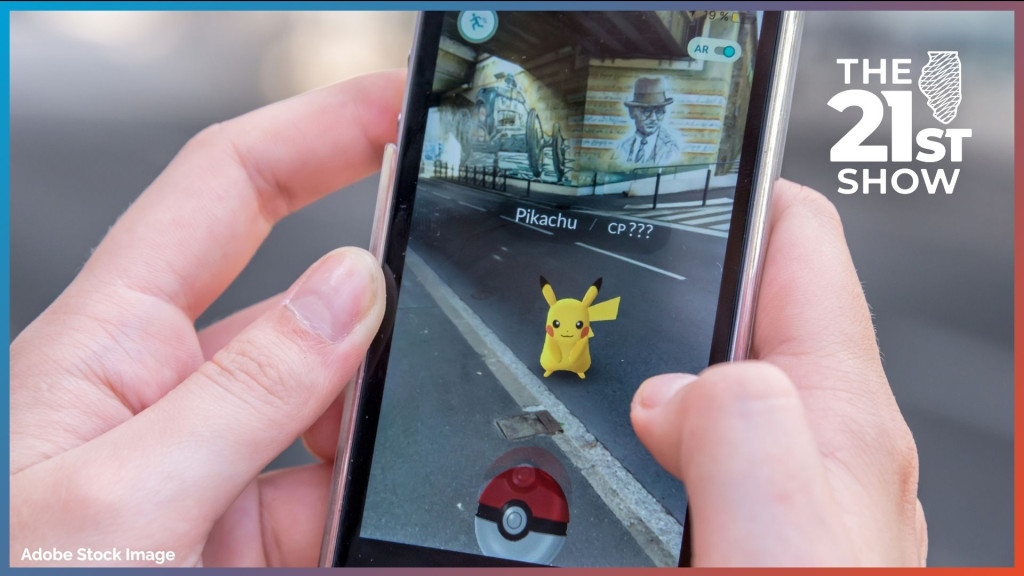
Roger Robbins: Well, it's kind of a scavenger hunt game that you can play on your phone, which most people have access to nowadays. It's integrated into real world locations, points of interest like churches, statues, parks, stuff like that. And basically you just wander around and play the game and catch little cartoon animals and do raids with other people in the community.

[00:02:46]
Brian Mackey: Tim, I wanna bring you into the conversation now. Talk to me about your Pokémon Go origin story. How did you get into this game?

[00:02:54]
Tim Holt: Well, I've actually been playing just about since the game first came out. I remember hearing it on the news. I downloaded it, tried it, I was like, all right, then I was at dinner with my wife and daughter that evening and they were talking about it and they had both downloaded it. And I was like, all right, I'll give it another — I'll get into it and we'll just — and things just snowballed from there. Me and the wife would usually, when my daughter was at her biological mom's house, we'd usually go out the nights and spend a little more time doing just kind of going around, doing the hunting and trying to find the stronger characters. And I've just played nonstop for about the last 10 years. And it's built friendships. We've actually been able to put stuff into the game — small businesses, things that — it's ways to almost like you can take a vacation in your own town, because when you look at these POIs you're able to find, you will find things that you never knew existed in your own area.

[00:04:12]
Brian Mackey: Points of interest or places of interest. That's good. Let me — let's come back to that point in a moment, Roger. Let me ask you the same question. What is your sort of origin story and what has kept you with this game for a decade?

[00:04:23]
Roger Robbins: Well, I originally got into the game because a friend of mine wanted to play and wanted to have someone to play with. This is before we knew that there was a community. They have since stopped playing, but the community is what keeps me coming back. There's a full spectrum of people who play and it's always a good time whenever we get together and organize and bond to achieve a similar goal in the game.

[00:04:51]
Brian Mackey: So how does that work, right? I think a lot of people think of phone games as really, in a lot of ways fostering isolation, right? People are — you know, they can be in a crowded restaurant and they're just staring down at this glowing orb in their hands. Talk about how this game actually works in terms of community building.

[00:05:11]
Roger Robbins: Sure, we have events where it takes multiple people to orchestrate with each other in order to achieve goals. Like there's a thing called gyms and raids in the game and they're set up at usually certain times, and we need a community to come together, work together and organize with each other in order to defeat and then hopefully capture the Pokémon that we were after, or to achieve certain goals like the community has to have so many of a certain activity in order to receive a reward.

[00:05:48]
Brian Mackey: And is it different in — if you have a sense of how it is in Chicago, say, versus smaller downstate communities like Champaign-Urbana?

[00:05:56]
Roger Robbins: Oh, absolutely. If you're in a smaller rural community, there's more necessity to organize than if you were in like Chicago. I've played in Chicago before. You didn't even have to see other people in the community that you were playing with, but here there's a need for communication about resources, what the best game method is to achieve what your goals are, and a need to communicate and work together in order to achieve the goals that you want versus larger cities where you could just turn on the game and maybe jump into something and four or five other people that you're never gonna see is gonna join you and finish it off for you.

[00:06:41]
Brian Mackey: Tim, I want to come back to something you said earlier, which is this idea of like a mini vacation in your hometown, right? Cause part of the point of Pokémon Go is to get people to explore communities and neighborhoods around them that they might not otherwise. Talk about some places maybe in the Quad Cities you've been that maybe you wouldn't have thought of visiting had it not been for this game.

[00:07:01]
Tim Holt: Well, like on the Illinois side we've got Black Hawk State Park, and it's probably — the first time playing Pokémon Go was the first time in my adult life that I've been there. I think the last time I went there would have been associated probably with the Cub Scouts back when I was 8 years old, and I'm now 50 and still playing. And just going to the parks like that and just exploring and seeing some of these things that I didn't know about, even here in town — Davenport is like the — we have statues of like the first [chiropractic move] that was recently put into the game by another player. You know, a lot of people know Davenport is a home of chiropractic, but stuff like that makes you look deeper. You know, the first manufactured bread slicer — for like the bread you would get at your grocery store — that bread slicer was created in Davenport, Iowa. I would have never known that without this game. So it's ways of finding information like that.

My work has actually taken me over the last couple of years to other towns, just — some in Illinois, some deeper in Iowa — and it's nice being able to — I can open this and like, wow, that's an interesting piece of history for, you know, this town. I think I was in Peru last year and I was able to use the game to actually find parts around that area so I could — while I was there for work, I was able to have some fun and explore their small area without really being stressed. And I was able to meet people through that because they were there playing the same game, doing some of the same battles.

[00:09:29]
Brian Mackey: Certainly an icebreaker. All right, if you're just joining us, this is The 21st Show. We're talking about Pokémon Go, which has been around for just over 10 years now. It was a super popular mobile game that debuted in 2016. It was a huge phenomenon — in the game, you virtually catch creatures using augmented reality and GPS on one's smartphone. The virality of the game has died down since then, but there is a core group of people who have continued playing it and building community around the game all these years later. And we're talking about that with Tim Holt, who is Pokémon Go community co-ambassador based in Davenport, Iowa, and Roger Robbins with the Pokémon Go community in the Champaign-Urbana area. About 5 minutes left, but you can call in if you want, 800-222-9455. You know, Roger, I'm sure there are gonna be some people listening to this who are reminded of that saying golf is a good walk spoiled, and I can imagine them — imagine that going to a park or a natural area and staring at your phone is kind of defeating the purpose of that. How do you respond to people who might say that?

[00:10:37]
Roger Robbins: I would probably use the analogy that it's hiding the vegetables. Yes, we're looking at our phones while at a park, but while we're engaging with each other, I've made friends that I never would have met if not for this game. I'm out in parks that I probably would not spend that much time in if not for the game. I would say that the game has taught me — as Tim said, there's things I've — I've lived in Champaign for a few years and I've learned more from the game than I ever would have just driving around or doing various other activities and stuff.

[00:11:20]
Brian Mackey: Hiding the vegetables. So this is my wife trying to convince our kids that zucchini bread counts as dessert. So, Tim, anecdotally, Gen Z — people who would have been in their early to mid-teens in 2016 — you know, a lot of them look back at 2016 as one of the last fun years before things became pretty serious in American life, right? We've had a lot happening since then. I wonder what you think of that sort of nostalgic look back and the role that Pokémon Go has in that.

[00:11:55]
Tim Holt: There's a lot of them that — like, in my player group, we have players from 6 years old up to [their] 70s. And as I just said, this has introduced people to other individuals that you would have never — you would have never seen, you had never known that even existed in your own area. But the people and conversations that [have happened], it's great. Your Gen Z's — they're in there playing and they're usually looking for some of us players that have been around longer, [who have] dug deeper into it. And it's great when you get to see a group of 50 people walking around the park, and some of these people have actually lost 30 to 50 pounds just by the extra exercise from playing this mobile game.

[00:13:01]
Brian Mackey: Amazing. Probably maybe one of the few video games in history you could say that about. Roger, we're almost out of time. Last question. What do you think accounts for the longevity of this game and do you think we'll be here in 10 years celebrating our 20th anniversary?

[00:13:17]
Roger Robbins: Well, I believe that's gonna be a thing in 20 years. I certainly hope so. I think the longevity is attributed to the facts that, one, it's [accessible]. Most people nowadays have a cell phone capable of downloading the app. It's very intuitive gameplay. The map comes up, you see animals on the screen, you click them, you toss a ball at them. It's not too much of a learning curve for most people. I also think that there's a bit of gameplay for everyone. Younger kids like the colorful little animals that they're catching. Middle-aged people like the nostalgia — remembering back to when Pokémon Go was first introduced when they were a child and they're able to share that with their own children. And perhaps older people who were around a little before Pokémon Go have a way to [get] low-impact exercise, get some fresh air and engage with other people.

[00:14:16]
Brian Mackey: Roger Robbins and Tim Holt are active in the Pokémon Go communities in their respective parts of Illinois. Thanks so much for sharing your passion with us today here on The 21st Show.

[00:14:26]
Roger Robbins: Thank you.

[00:14:28]
Brian Mackey: Thank you. That is it for us today. Coming up on tomorrow's program, Robert Pape is a researcher at the University of Chicago. He's written multiple books on suicide terrorism, and now he's turning his attention to America. His new book is called "Our Own Worst Enemies: America in the Age of Violent Populism." It's a stark warning. He says the greatest threat to a democracy isn't extremists — it's when ordinary people quietly decide force is justified. That is from the preface. We're actually taping that conversation with him this afternoon. If you have a question or comment, we'd love to include it. talk@twentyfirstshow.org is our email address. Otherwise, that's it for us today. The 21st Show is a production of Illinois Public Media. I'm Brian Mackey. Thanks for listening. We'll talk with you again tomorrow.
A decade ago, Pokémon Go sent Illinoisans into parks and parking lots … chasing virtual cartoon creatures with their phones. The craze faded, but the game and its most dedicated fans have kept on.
Two Pokemon Go enthusiasts discuss how the game has evolved in the past ten years and how it continues to connect people and communities.
GUESTS
Roger Robbins
Member, Pokemon Go community in Champaign-Urbana
Tim Holt
Community Co-Ambassador, Pokemon Go Quad Cities
