Art Songs for Arbor Day
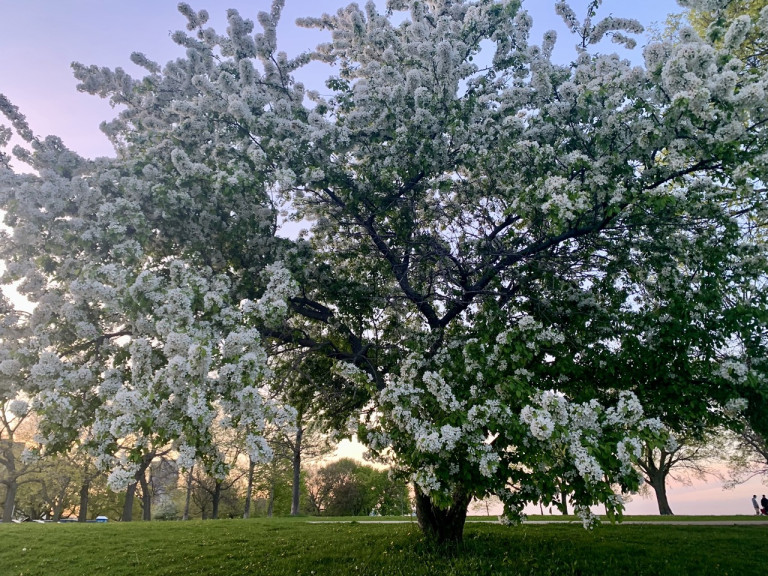
Trees have long served as a source of inspiration for the great poets and writers—from Shakespeare and Goethe to James Joyce. As a result, we have a wealth of art songs about trees in their various forms and the spectrum of emotions they can evoke. In honor of Arbor Day on April 24, we present a curated playlist of some of our favorites.
(Listen to the Spotify playlist below or the Apple Music playlist at the bottom of the page. Follow the links in the story for texts and translations of the chosen songs.)
Trees take on a variety of meanings throughout the art song canon. In Romantic-era poetry, forests often serve as a place for lovers’ trysts, the boughs of the trees providing friendly protection from unwanted observers. James Joyce’s “In the Dark Pinewood” is a 20th-century continuation of this Romantic tradition, heard here in a setting by Samuel Barber. This seclusion can also foster feelings of freedom, as in Ivor Gurney’s “Under the Greenwood Tree.” The text from Shakespeare’s As You Like It embraces the sense of freedom and carefreeness that being in nature can bring.
The German Romantic poets even created their own words for the experience of wandering in the woods. Joseph Marx’s “Waldseligkeit” (“Woodland Rapture”) recounts the blissfulness of being alone in the forest, while in Max Reger’s “Waldeinsamkeit” (“Woodland Solitude”), the only observer of the poet’s encounter with his beloved is a benevolent blackbird. Trees also often take on anthropomorphic qualities in these poems. They whisper to the listener in the rustling of their branches in Robert Schumann’s “Der Nussbaum” (“The Walnut Tree”) and serve as a familiar, stable presence in Franz Schubert’s “Der Lindenbaum” (“The Linden Tree”).
Jake Heggie’s “Joy Alone (Connection)” is a modern take on this same feeling of wonder that the woods can inspire. The poem by Gini Savage paints a colorful picture of a joyful woodland sojourn, complete with chattering chipmunks and “squirrels who stuff their briefcases for the winter.” Mozart’s “Dans un bois solitaire” (“In a Solitary Wood”) presents another fantastical scene. In the song, the poet stumbles upon Cupid in the forest. In punishment for waking him up, Cupid shoots the poet in the heart with an arrow, dooming him to love the woman who forsook him for eternity.
Trees can also serve as a metaphor for growing old and the cyclic nature of life, as in “Loveliest of Trees,” heard in two versions on this playlist by George Butterworth and John Duke. Duke’s version is blithe and sing-songy, whereas Butterworth’s setting brings out the poem’s bittersweet undertones. In a similar vein, the darkness of the forest can mirror feelings of despair, as in Claude Debussy’s “L’ombre des arbres” (“The Shadow of Trees”) and Gabriel Fauré’s “Dans la forêt de septembre” (“In the September Forest”), where the coming winter causes the poet to ponder his own mortality.
These are just a few examples of how trees feature in the classical song repertoire as vehicles for various emotions and moods. We hope this playlist inspires you to take a walk in nature to experience some “woodland rapture” for yourself, or even plant a tree in honor of Arbor Day!