Josh Garber
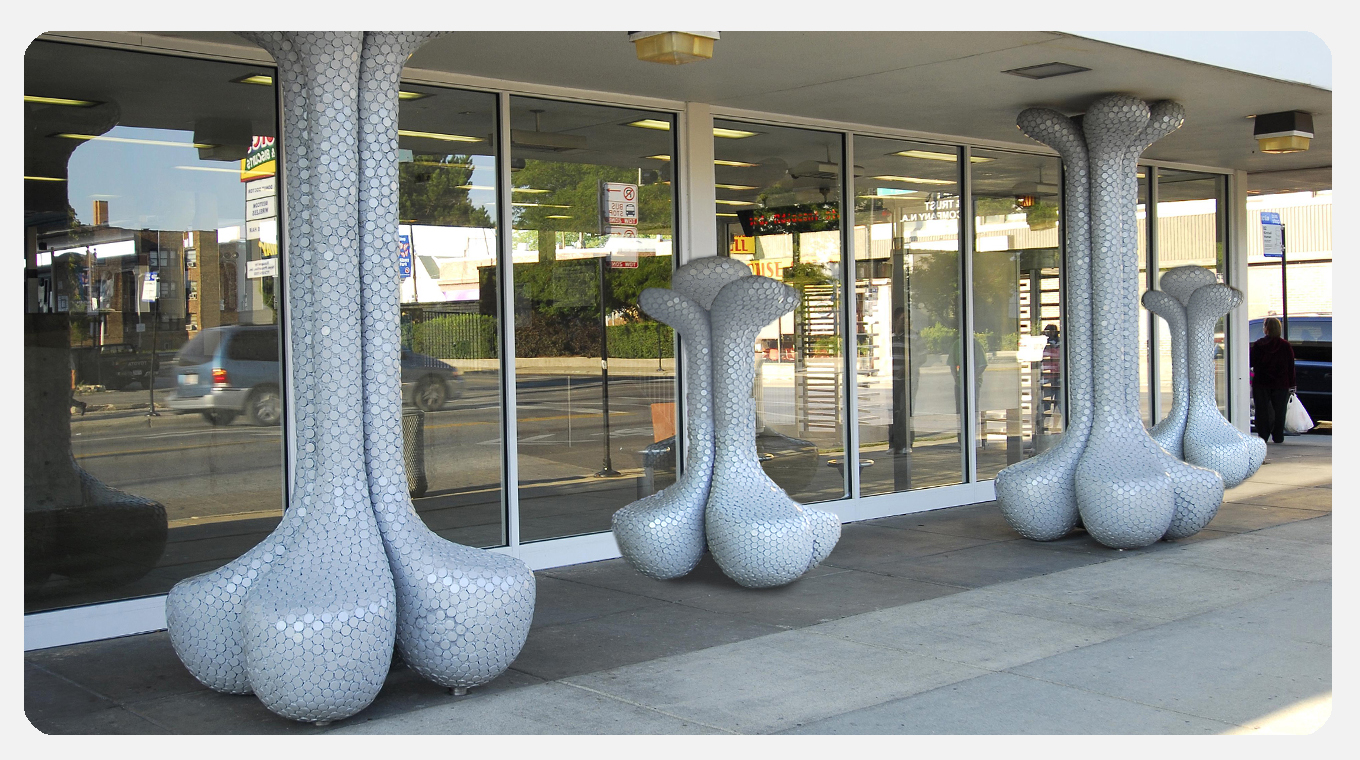
For over 35 years, sculptor Josh Garber has been experimenting with linear forms, transforming them into unexpected shapes that embody movement and sensuality.
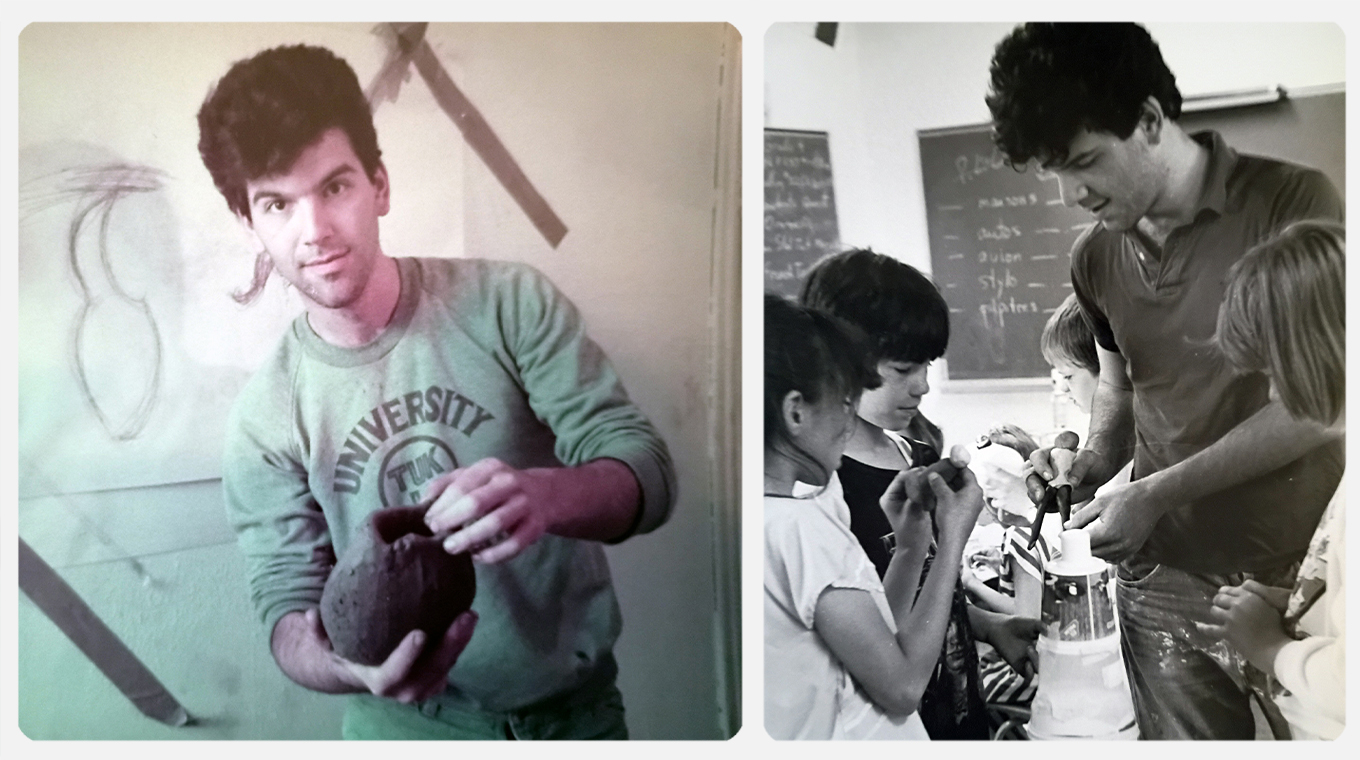
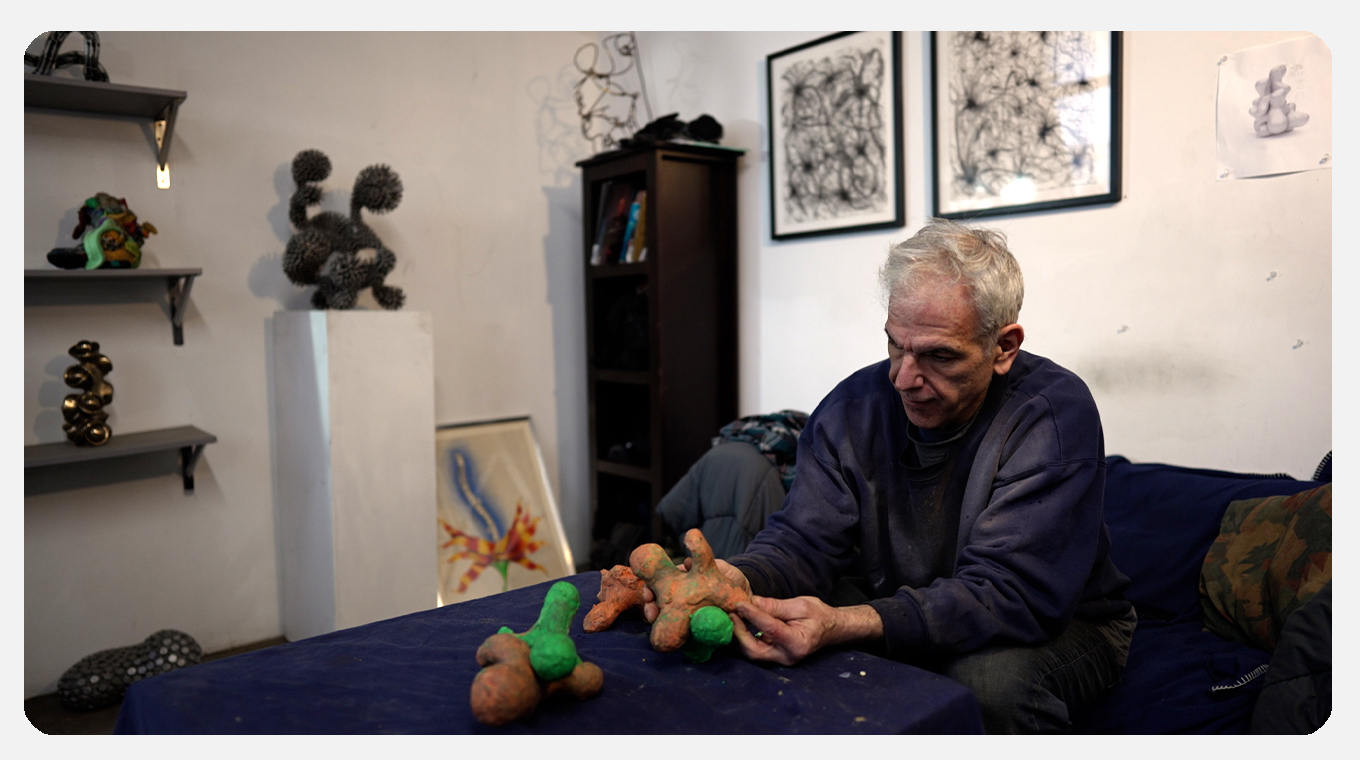
Growing up, Garber played the flute and was fascinated by jazz. He loved the elements of improvisation and spontaneity. Later, in high school pottery classes, Garber discovered the “immediacy” of clay.
“I was fascinated by clay because of its immediacy and its way of documenting the imprint of touch. That clay sensibility has been with me ever since.”
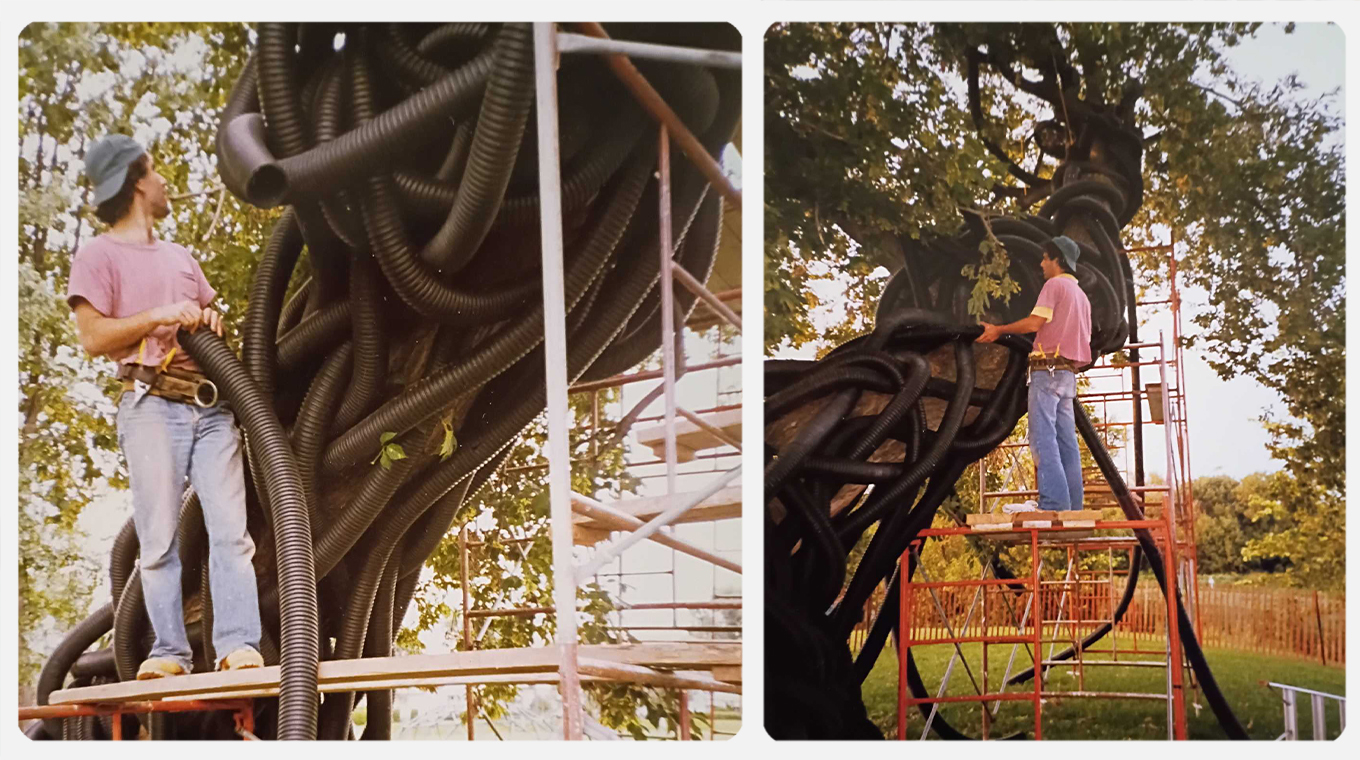
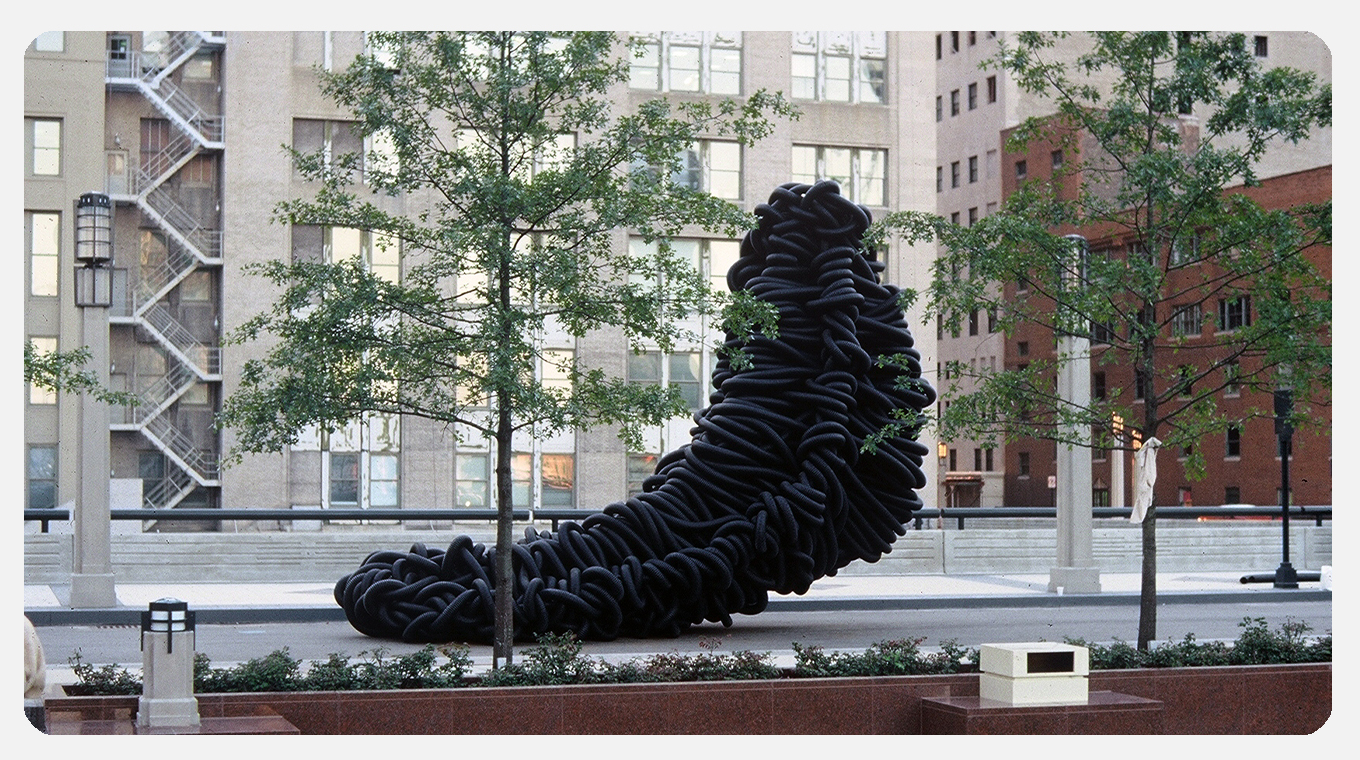
As he began experimenting after finishing his studies at Alfred University, Garber started using sewage pipe to mimic the techniques he used in coil pottery on a larger scale. Industrial materials became his new language. Hard, functional objects transformed into sculptural gestures, exploring the tension between beauty and danger, pollution and progress.
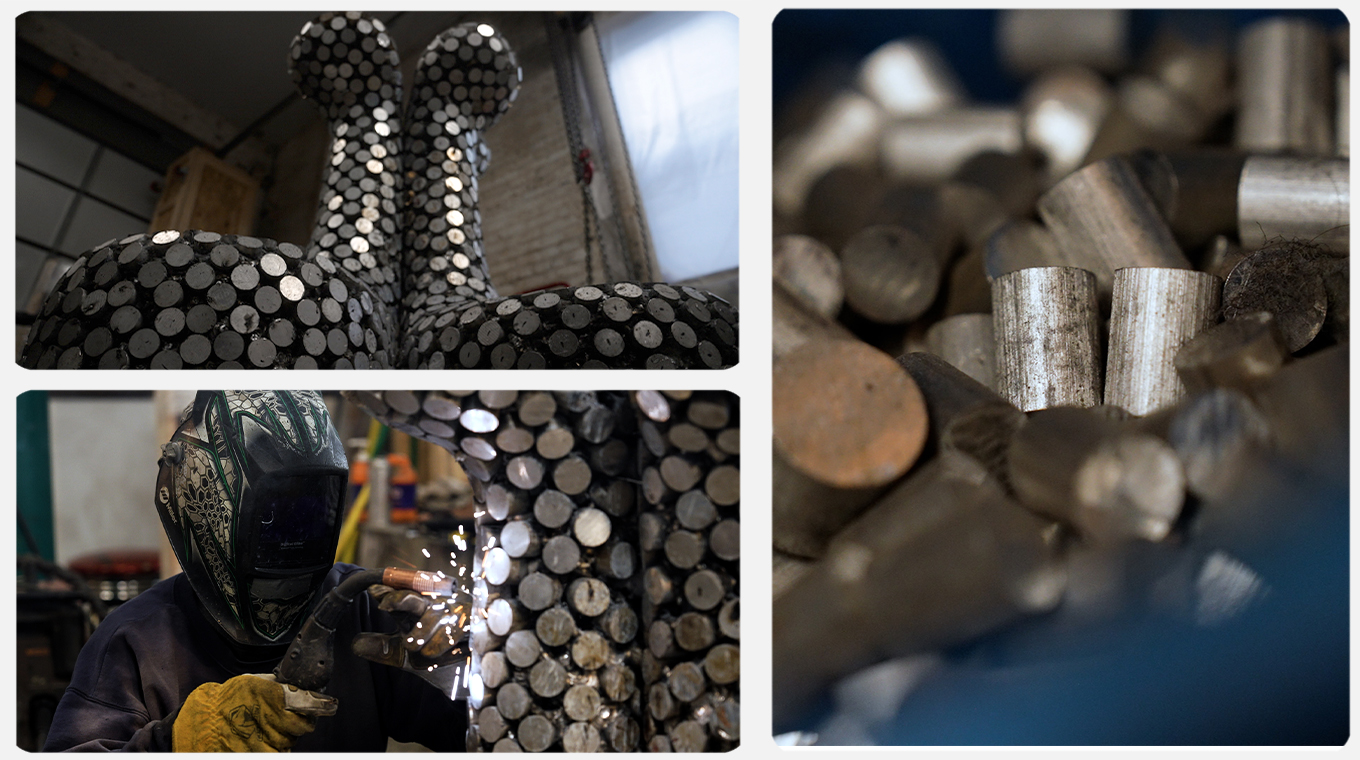
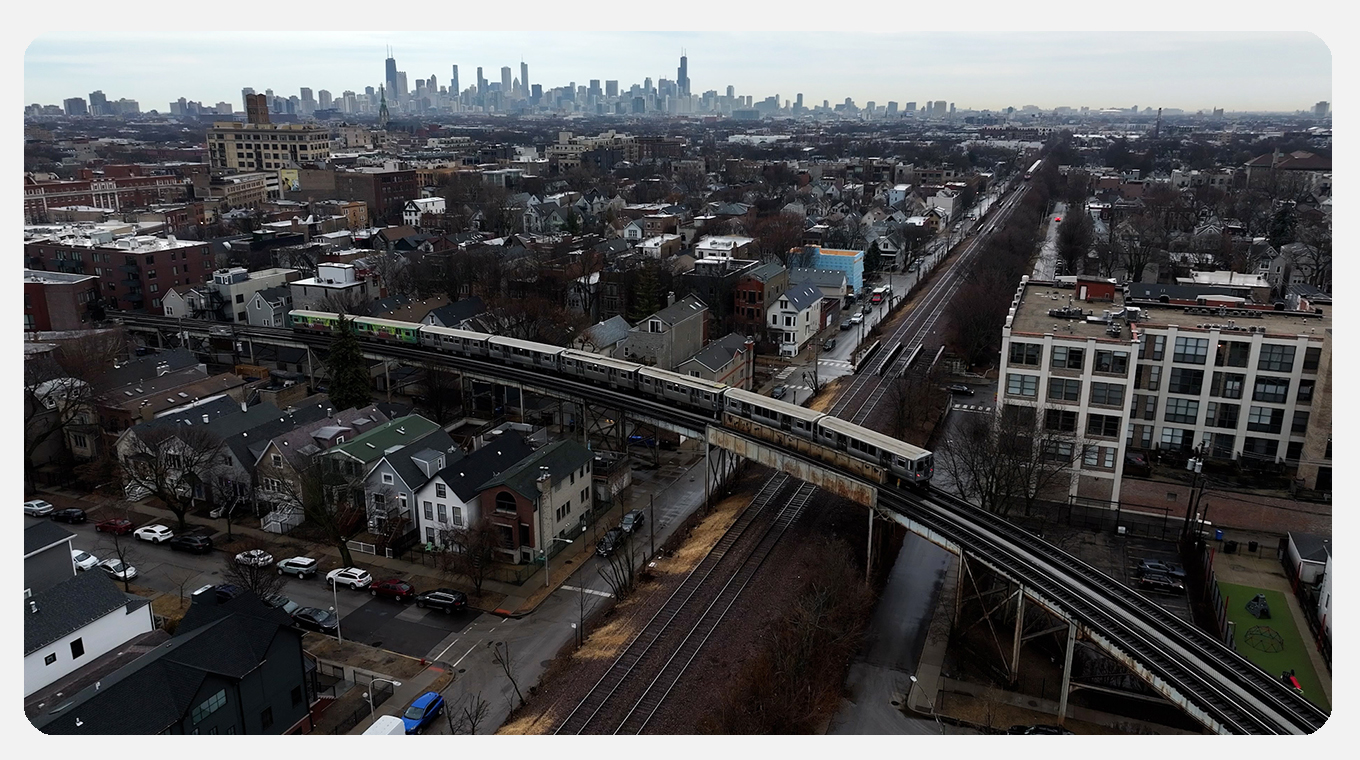
Intrigued by Chicago’s industrial nature, Garber found a studio under the rumble of the elevated train tracks. Garber was drawn to the bolts and nuts jutting from the El columns and internalized the pulse and rhythm of passing trains, creating layered welded steel bar constructions that echoed each of these elements. The city became a collaborator.
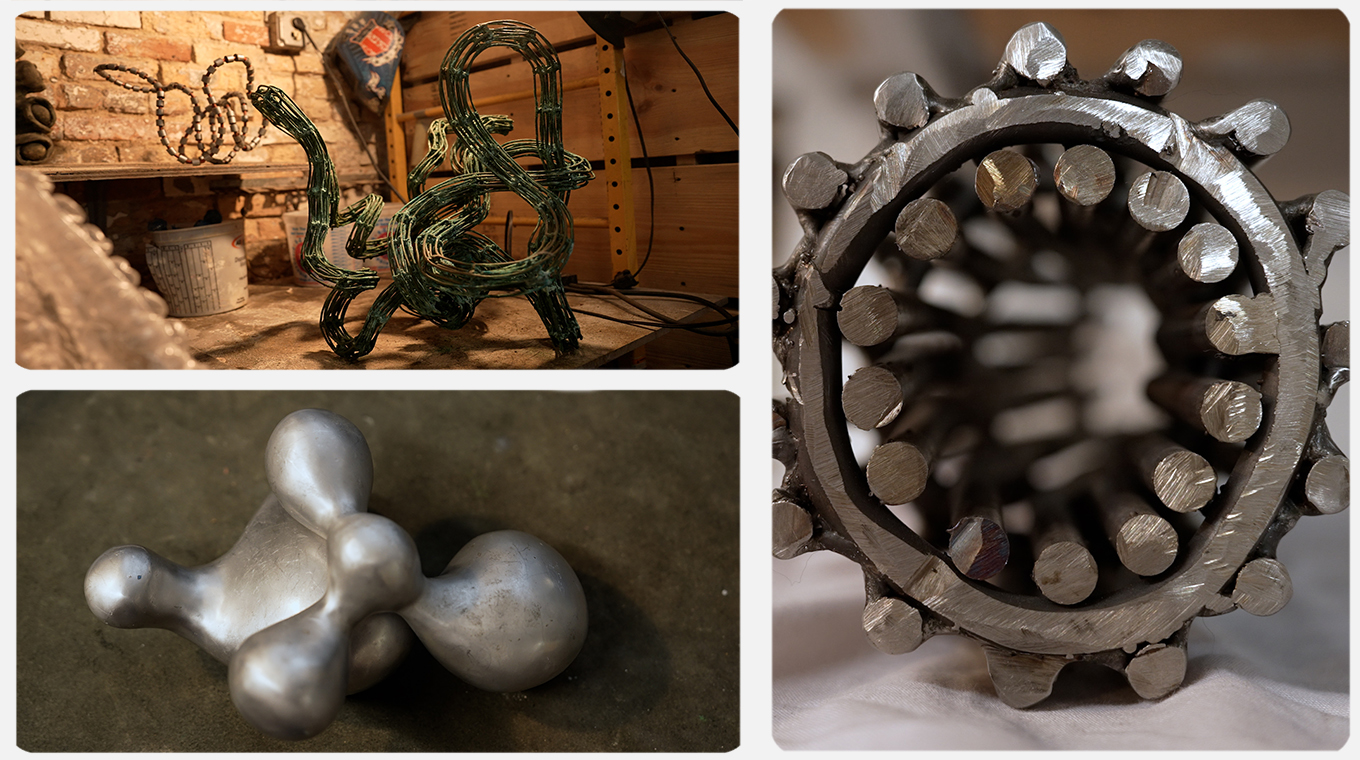
In each of his pieces, Garber is often commenting on playfulness—what play is, what it means to us, and how we react to it. He tries to push the boundaries of what metal can express and transforms functional, cold, and rigid elements into something that feels soft and sensual.
After decades of public commissions and exhibitions in Chicago, New York, and Canada, Garber decided to go back to school for his MFA at the School of the Art Institute of Chicago.
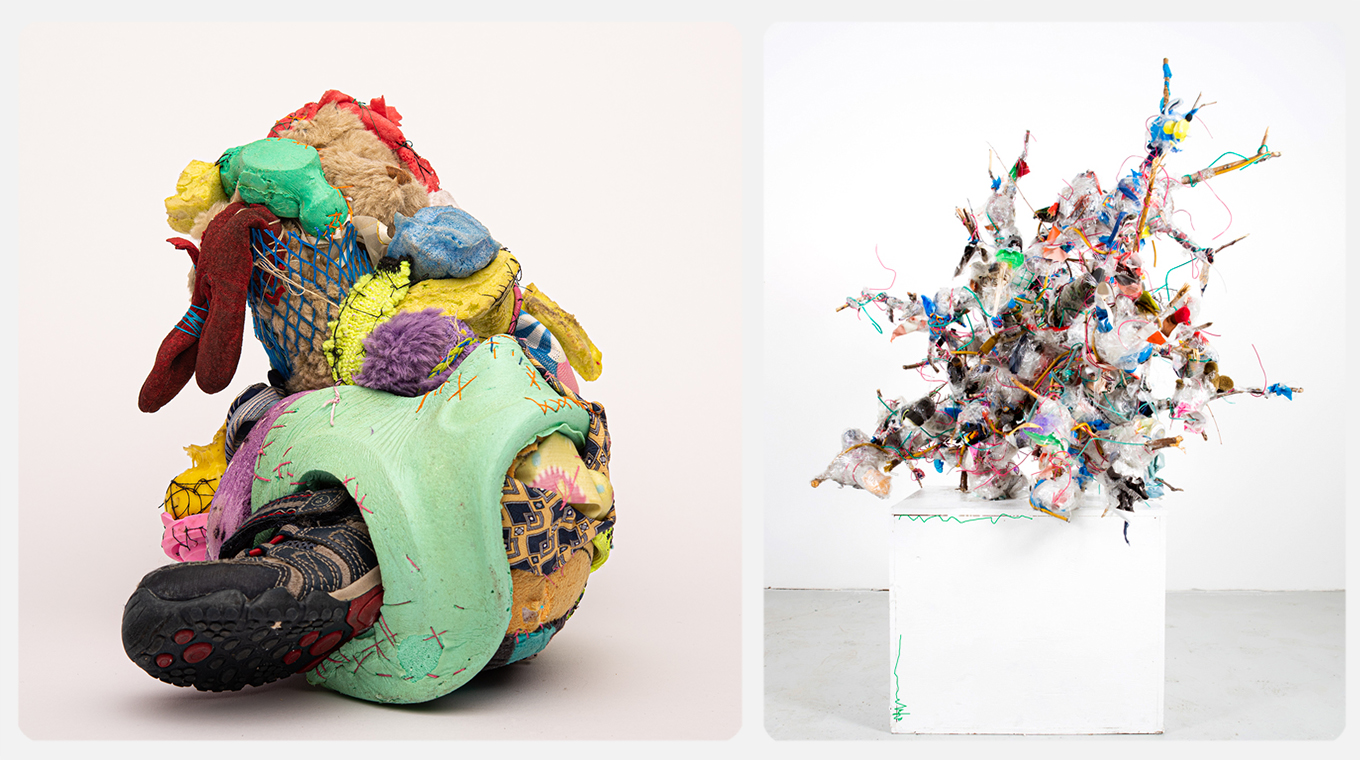
He describes this experience as “explosive,” exposing him to new and different art forms, and he studied nonsense and misdirection. This freedom to explore was exciting, but he also felt a great sense of vulnerability since this new work was quite a departure from what he had done before. Eventually, those influences came together in a new body of work: carved aluminum forms. These interactive sculptures are designed to be manipulated by viewers. Interlocking shapes can shift into multiple configurations. The audience doesn’t just observe the work; they complete it.
In this way, Garber believes public art shouldn’t sit at a distance. His pieces resist traditional separation and are instead designed to be touched, leaned on, sat upon, and felt. Garber believes that when someone is able to physically engage with public art, they claim a small piece of ownership. It becomes part of the neighborhood, the culture, and the locale.
Today, Garber is allowing the threads of his career to evolve and explore many of the ideas he got to “play” with during his MFA and hopes that his work radiates an energy that is joyous, stimulating, and alive.