



Route 66 in Illinois
We’ll introduce you to some of the interesting stops–and interesting people–along the Illinois portion of historic Route 66, including a stop at the American Giants museum in Atlanta, Illinois.
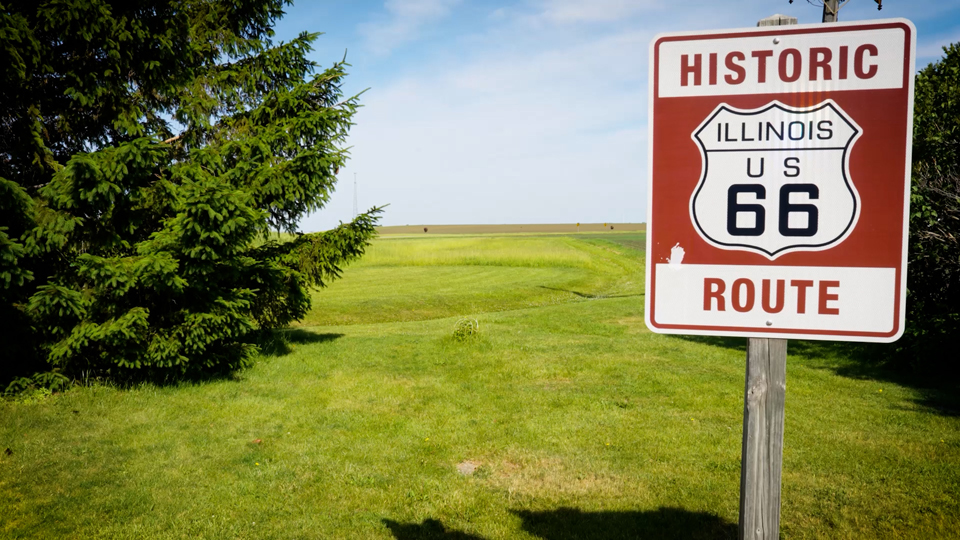
Stretching from Chicago to Santa Monica, California, Route 66 passes through eight states and three time zones. Illinois is the starting point of the iconic highway, and the very first state to completely pave its entire segment.
Route 66 was officially commissioned on November 11, 1926, the roughly 300-mile stretch of Route 66 in Illinois would start in downtown Chicago at the intersection of Adams Street and Michigan Avenue, and cut diagonally through the state, through more than 90 towns and communities along the way, and end at the Chain of Rocks Bridge in Madison, Illinois. From there it would pass along the Mississippi into St. Louis.
In the early part of the 20th century, people traveled between Chicago and St. Louis on the “Pontiac Trail” - originally a native-American trail, which turned into an unpaved stagecoach byway. It would travel southwest through Springfield and into the St. Louis area. Originally used by Indigenous Peoples, it connected travelers to waterways, including the Kankakee, Des Plaines, and Fox rivers, and into Chicago and Lake Michigan.
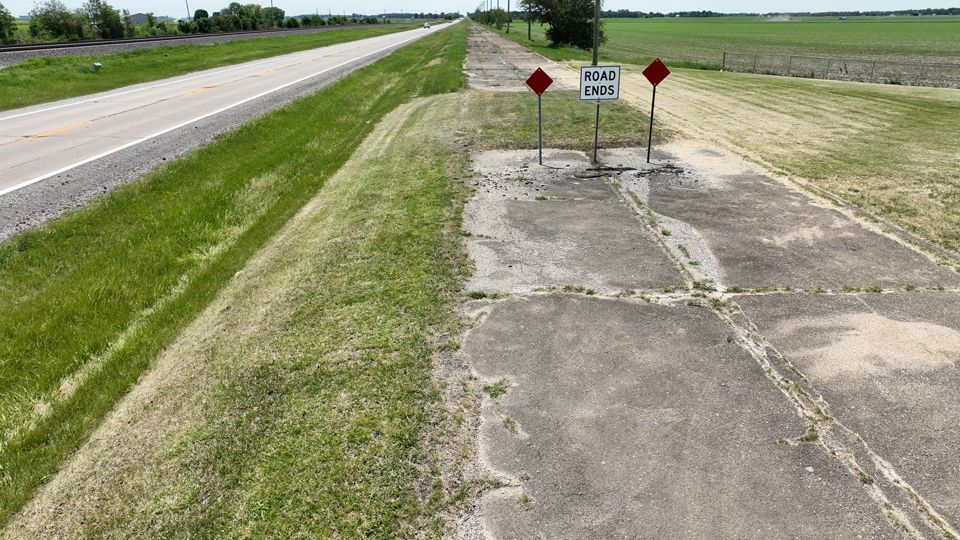
While much of the national route remained unpaved well into the 1930s, Illinois capitalized on its pre-existing road infrastructure. The state cleverly built Route 66 on top of State Route 4. Because of this forward planning, Illinois was the first of the eight Route 66 states to offer an entirely mud-free, concrete roadbed—earning it the proud historical nickname "slab all the way"
Since the road was commissioned during Prohibition, the smooth, fully paved roadways made the Illinois stretch a notorious high-speed corridor for bootleggers smuggling alcohol between rural central Illinois stills and underground urban speakeasies.
As the gateway to the West, Route 66 symbolized a pathway to freedom and adventure, capturing America’s imagination. John Steinbeck’s classic 1939 novel, The Grapes of Wrath, told of the hardship on what he called the “Mother Road”, bringing national attention to the road and creating much of the myth and lore the road would come to be known for.
During World War II, Route 66 in Illinois shifted from a tourist highway to a critical national defense artery. It was heavily used for military convoys and transporting defense equipment. The massive influx of heavy wartime trucking severely deteriorated the original two-lane highway, prompting early military-funded expansions into one of America's first four-lane divided highways.
By 1957, parts of Route 66 were already being chosen for sections of I-55, I-74, or I-190, highways that were being created by President Eisenhower. Route 66 was being travelled less and was left in increasingly disrepair and neglect. The “Mother Road” would be officially removed from the U.S. Highway System on June 27, 1985.
Today, most of Route 66 in Illinois is still drivable, passing through 90 communities along more than 400 miles that take in the state’s three historic alignments. The road passes through many of the same communities today, some of which are remnants of what they once were. There are many historic stops along the way that help tell the story of Route 66.
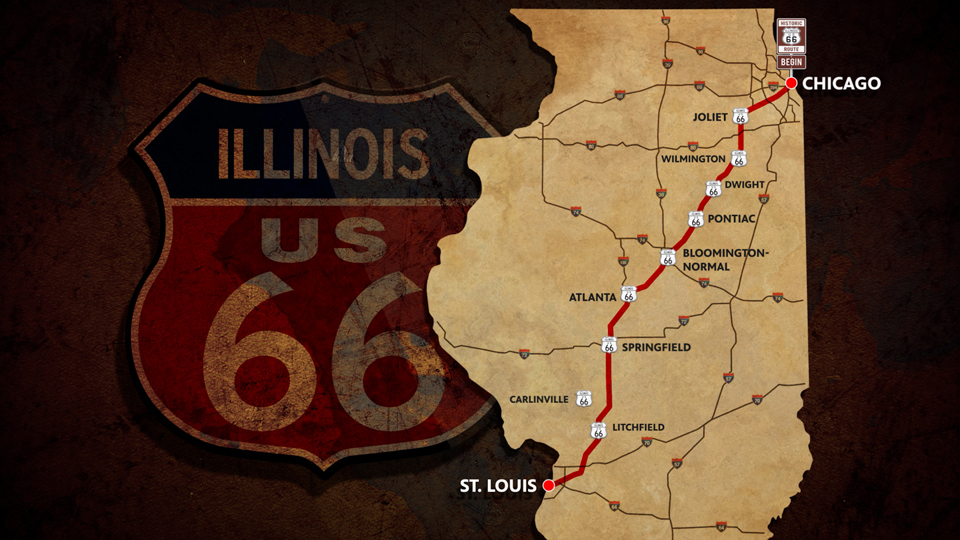
Here are just a few of the intersting stops you'll encounter along Route 66 in Illinois…
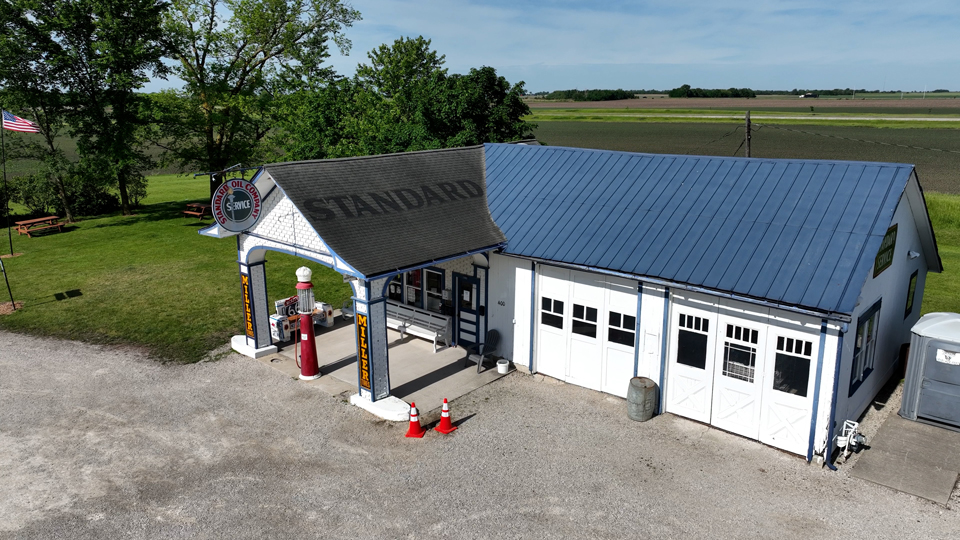
Ambler’s Texaco Gas Station - Dwight, IL.
Also known as Vernon’s Texaco Station and Becker’s Marathon Gas Station, is located along historic Route 66 in the Village of Dwight. The station gets its name from longtime manager Basil “Tubby” Ambler, who operated the station from 1938 to 1966. Although he left the station in 1966, the station continued servicing motorists until nearly the turn of the 21st century, making it one of the oldest continually operated service stations along the Mother Road.
Gas stations were consciously styled to be homey and inviting to customers, as well as inconspicuous in their new residential, suburban surroundings. In the early 1940s, following a national trend that saw gas stations evolve to full service garages, Mr. Ambler added a service bay of simple concrete block to the north side of the original building.
MCLEAN COUNTY
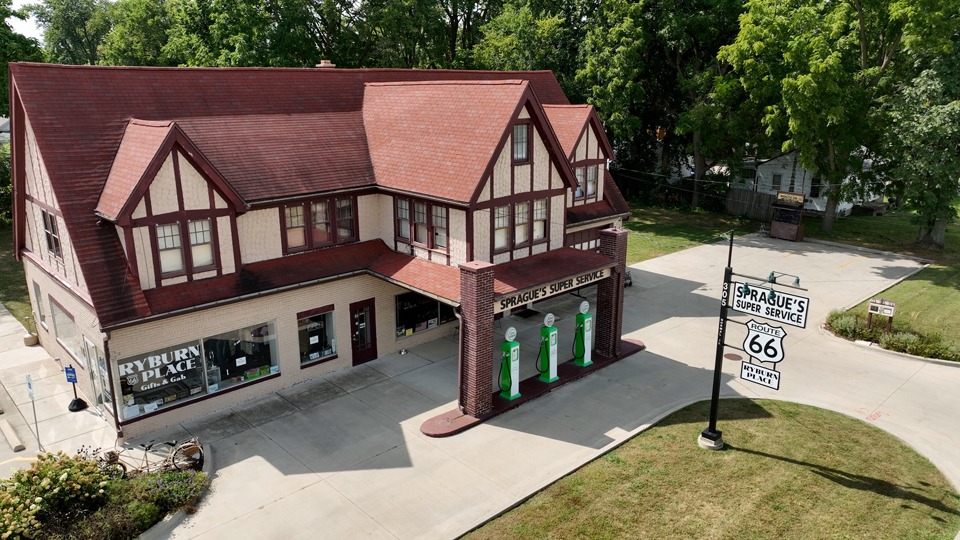
Sprague's Super Service - Normal, IL
William Sprague’s Super Service Station was built in 1931. In addition to housing Sprague’s contracting business, it included a restaurant on the ground floor and apartments for the owner and station attendant on the second level. Now known as Ryburn Place at Sprague’s Super Service, it is currently owned by the Town of Normal and is listed on the National Register of Historic Places and is in the Route 66 Association of Illinois Hall of Fame.
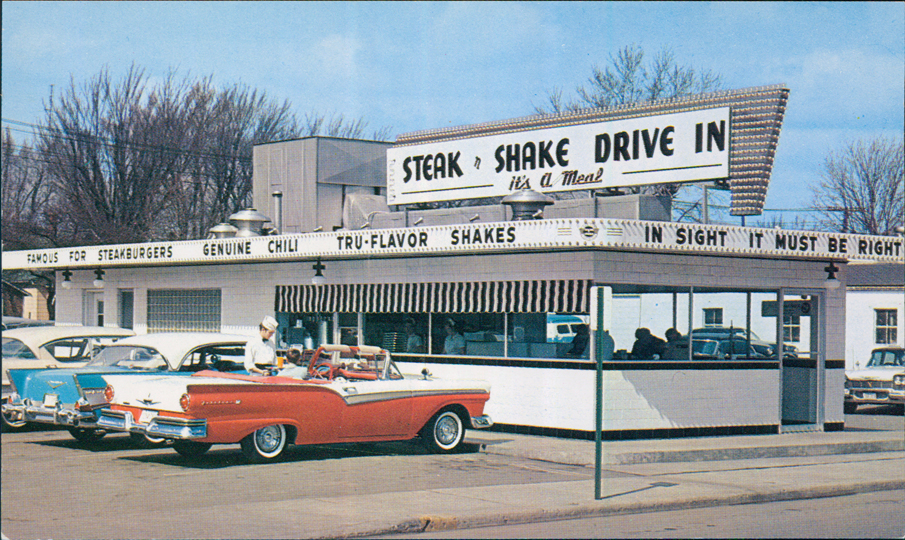
Steak N’ Shake - Normal, IL
The Shell Inn Restaurant and gas station, owned by Gus Belt, struggled during its first few years of operation. In 1934, Belt turned the Shell Inn into the White House Steak and Shake. Due to a public distrust of meat products at the time, the new restaurant adopted the slogan, “In Sight it Must be Right,” because the beef was ground in front of customers to ensure freshness and quality. Steak ‘n Shake became very successful and began franchising in 1945. The original location at the corner of Main Street and Virginia Avenue was sold to Monical’s Pizza in the 1990s.
Casey's Market Basket - Bloomington, IL
After taking over a fruit stand in 1949, Eldon “Casey” Casebeer opened the area’s first 24/7 grocery store, known as Casey’s Market Basket. Casey began operating a seasonal garden shop behind the store, and eventually sold the grocery store in 1968 to run the garden shop year-round. Ray Lartz, Casey’s son-in-law still operates Casey’s Garden Shop and Florist today.
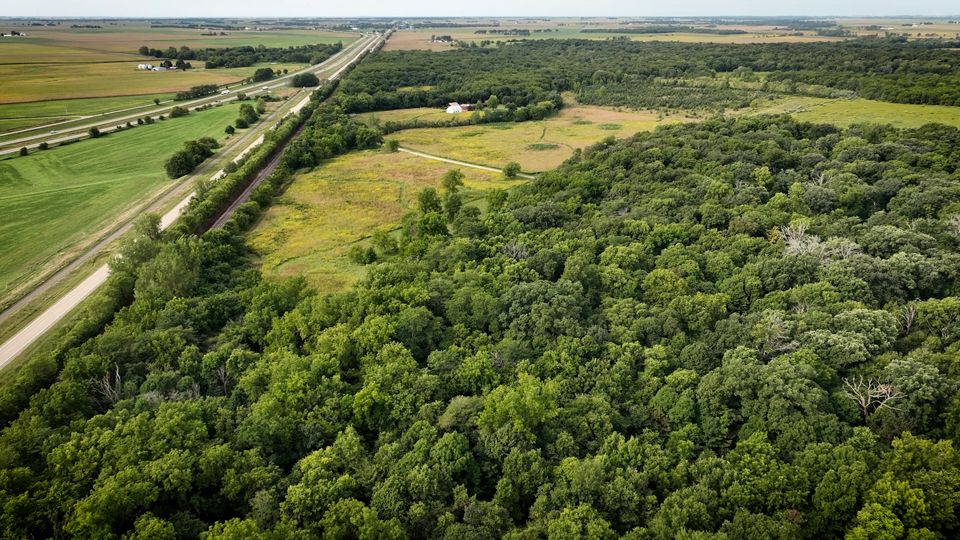
Funks Grove
At 1,200 acres, it is the largest intact prairie grove in Illinois, and one of the largest remnants of virgin forest in Illinois. The railroad, which runs parallel to Route 66, was built by Irish immigrant laborers – hundreds of whom died in the effort from a cholera outbreak. Fifty-three Irishmen and three Native American men were buried in a mass grave in the Funk’s Grove Cemetery. The grave site is marked by an Celtic Cross that was erected in 2000.
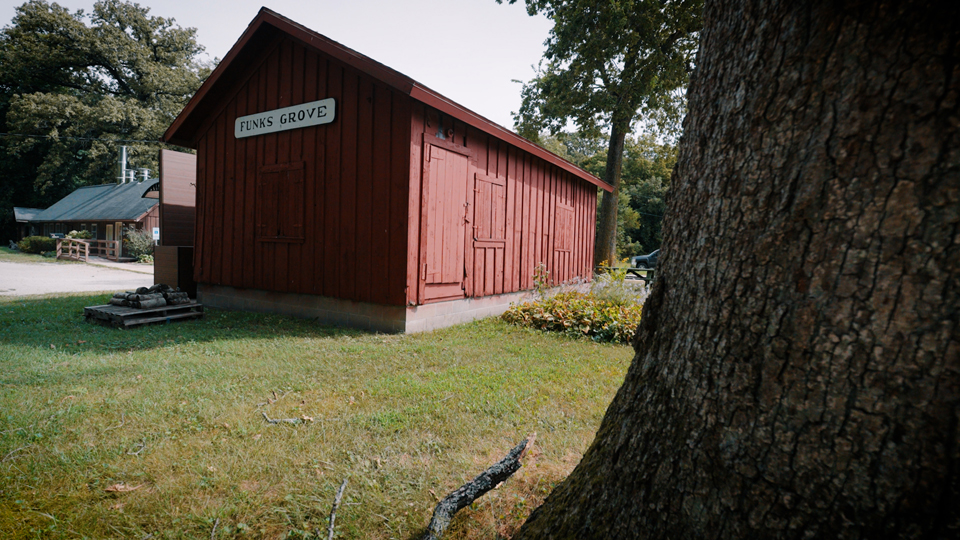
Funk's Grove Pure Maple Sirup - Shirley, IL
Isaac Funk established his home here in 1824, where the family produced maple syrup for personal use, as it was the only readily available form of sweetener. Funk’s grandson, Arthur Funk opened the first commercial maple syrup farm in 1891. Unlike many businesses that went under after the construction of I-55, Funks Grove still saw a consistent flow of customers after they put up a sign on the new interstate. Still operated by the Funk family today, Funks Grove has benefited from a renewed interest in Route 66 tourism.
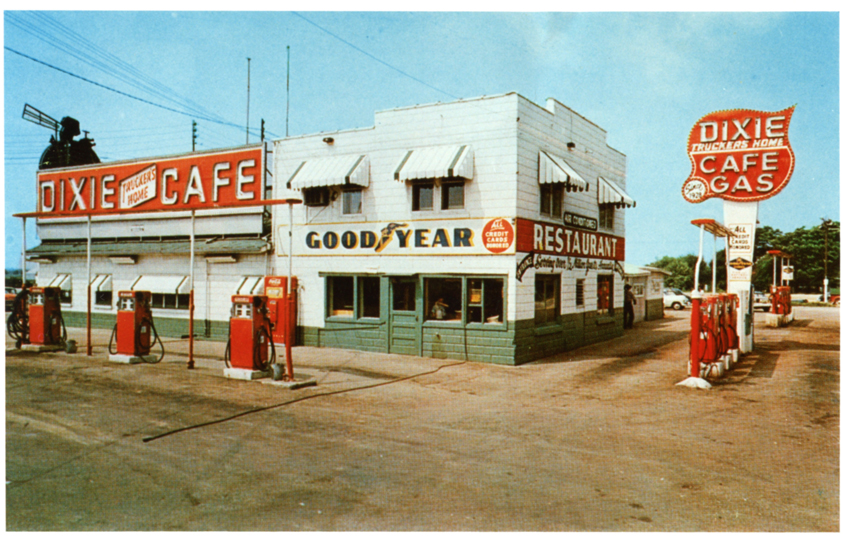
Dixie Trucker's Home - McLean, IL
The Dixie Trucker’s Home opened at Route 66 and US 136 on January 1, 1928. It was open continuously until a fire in 1965, but a new building was constructed in 1967 that could accommodate many more guests. The Route 66 Association of Illinois Hall of Fame was located here for a short time, before it moved to Pontiac in 2004. The business became the Dixie Travel Plaza and received a major renovation in 2009.
Patton Log Cabin - Lexington, IL
The Patton Cabin was built by John Patton in 1829, making it the oldest standing structure in McLean County. Kickapoo and Delaware Indigenous peoples participated in building the cabin along with several white settlers, making it the only surviving structure in central Illinois connected with the exchange between white settlers and Indigenous groups.
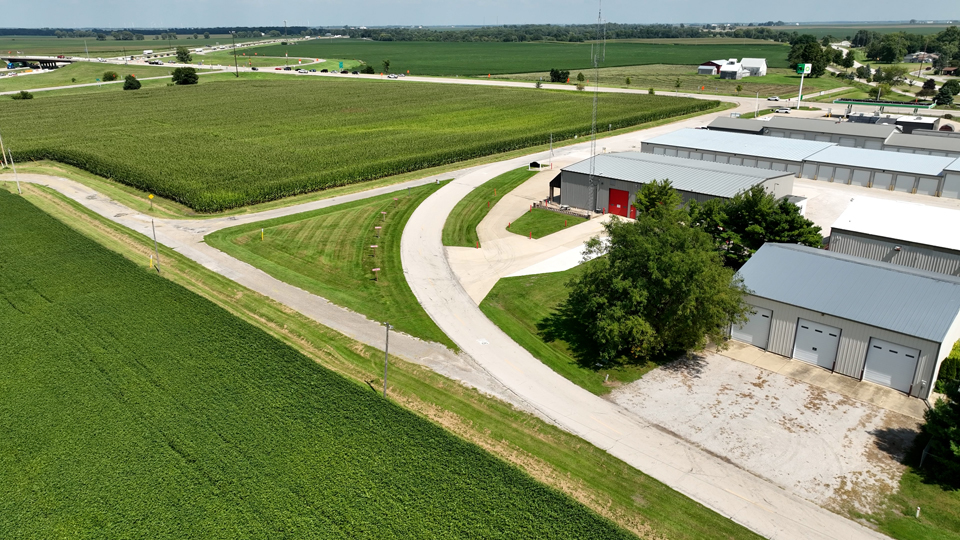
Dead Man’s Curve - Towanda, IL
Built in 1927, this narrow, sharp turn has caught countless motorists by surprise, earning its ominous name as cars and trucks struggled to slow down in time. The two-way road was only 16 feet wide.

