



The Champaign-Urbana Symphony Orchestra Plays Mahler’s Symphony no. 5
// This is a machine generated transcript. Please report any transcription errors to will-help@illinois.edu.

[00:00:00]
Jason Croft: Good evening from Urbana and the University of Illinois, it's Prairie Performances. WILL's weekly show presenting classical and jazz from the heart of the prairie in central Illinois. Prairie Performances is made possible in part by funding from the John Frayne Graduate Student Classical Music Work Experience Endowment.

[00:00:28]
Mel Miller: Good evening and welcome to Prairie Performances. I'm your host, Mel Miller.

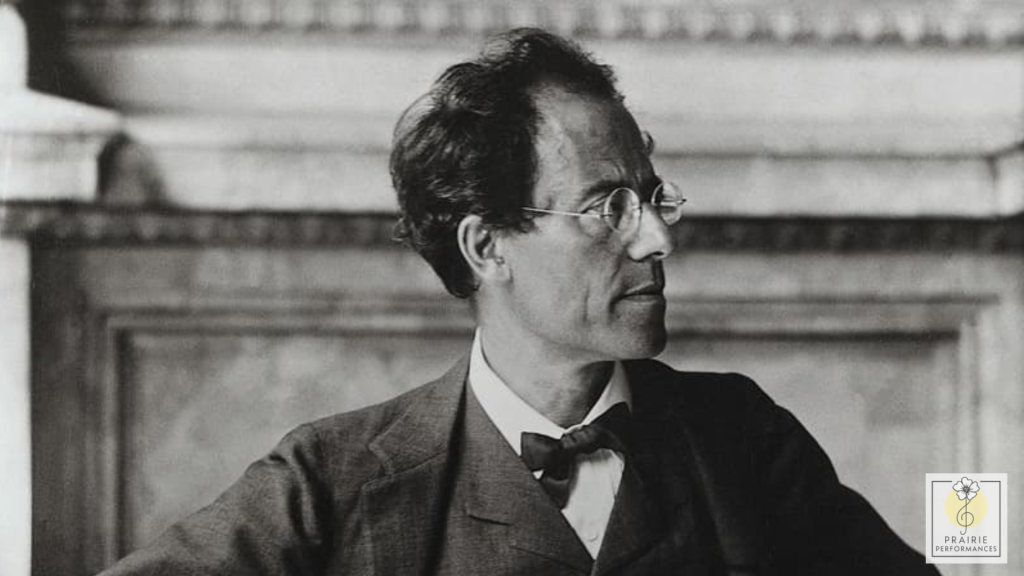
On tonight's archive episode, we're bringing you the Champaign-Urbana Symphony Orchestra's 2018 performance of Gustav Mahler's Symphony number 5. Premiered in 1904 with Mahler conducting, the Fifth Symphony represents an interesting turning point for the composer, being both a stylistic break from his previous symphonies as well as a direct continuation. The opening trumpet call is quoted directly from the end of the fourth symphony, bridging the two works. At the same time, the fifth symphony is the first since Mahler's Symphony number 1 to be purely instrumental, and Symphony number 5 is non-programmatic, meaning it doesn't attempt to communicate a narrative or paint a picture for the audience. Rather, it's a deeply interior composition, what Mahler scholar Donald Mitchell calls an "interior drama."

While Mahler's fifth symphony has been described as being in C minor, the composer famously rejected this attribution due to the number of key signatures that we hear, and the fact that he breaks symphonic convention by starting and ending in different keys. What's more, the tone range and emotional depth of the work is incredibly impressive, from the daunting funeral march of the first movement, the explosive and stormy second movement, the much lighter scherzo, and the beautiful adagietto concluding the work.

What all of these elements point to — the non-programmatic character, the lack of a single key signature, the substantial emotional depth — is that Mahler's fifth symphony cannot be defined in brief or simple terms. To grasp its full depth, you really have to experience it for yourself, which is why we're bringing it to you here on Prairie Performances.

Without further ado, the Champaign-Urbana Symphony Orchestra's performance of Mahler's Symphony number 5 with Stephen Alltop conducting.

Thank you so much for listening with me this evening here on Prairie Performances.

[01:08:04]
Mel Miller: Prairie Performances is a production of Illinois Public Media. I'm your host and producer, Mel Miller. I hope you'll join me next week!
On this week’s archive episode of Prairie Performances, we’re bringing you the Champaign-Urbana Symphony Orchestra’s 2018 performance of Gustav Mahler’s Symphony no. 5. We will talk about what makes this work both a continuation of and departure from Mahler’s previous symphonies, why Mahler refused to assign a key signature to the work, and more!
Tune in for an abridged performance on Thursday, August 27 at 7pm CST on Illinois Classical 90.9 or stream the full version now!
Playlist
| Title | Artist | Album |
|---|---|---|
| Gustav Mahler's Symphony no. 5 | Champaign-Urbana Symphony Orchestra |
