



Highs and Lows: Black student expulsion rates in Illinois schools
Schools in Illinois discipline Black students at much higher rates than their white peers. We looked into why.


Schools in Illinois discipline Black students at much higher rates than their white peers. We looked into why.
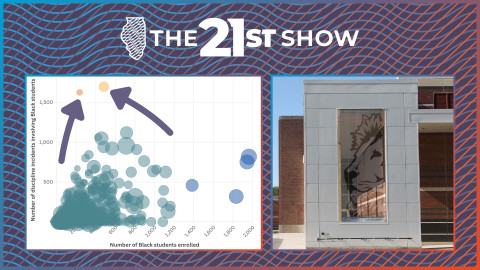
Schools in Illinois discipline Black students at much higher rates than their white peers. Public radio education reporters Emily Hays and Peter Medlin dug into the data for two schools with the most extreme disparities: Kennedy Middle School in Rockford and Lanphier High School in Springfield.
We'll talk about what they found, hear some of the stories behind the numbers, and learn about schools that are doing things differently.

According to some, school punishment and suspension doesn’t work. Studies show that students who have been suspended are more likely to drop out, be arrested, and be incarcerated later in life. And they say this cycle of violence has ripple effects for parents, educators, and communities.

Across the U.S., more than 2,000 people have reported vaping-related lung illnesses, and 47 have died. Some vaping happens in schools, so they share the burden of bringing this crisis under control. Which raises the question: what should the consequences be for a student caught vaping?

Schools in Illinois and across the country are turning to restorative justice practices as an alternative to traditional discipline models. Mikhail Lyubansky, an associate professor of pyschology at the University of Illinois Urbana-Champaign, studies restorative justice, and he's written about some of the criticisms of the way it's used in schools.
Campbell Hall
300 N. Goodwin
Urbana, IL 61801
